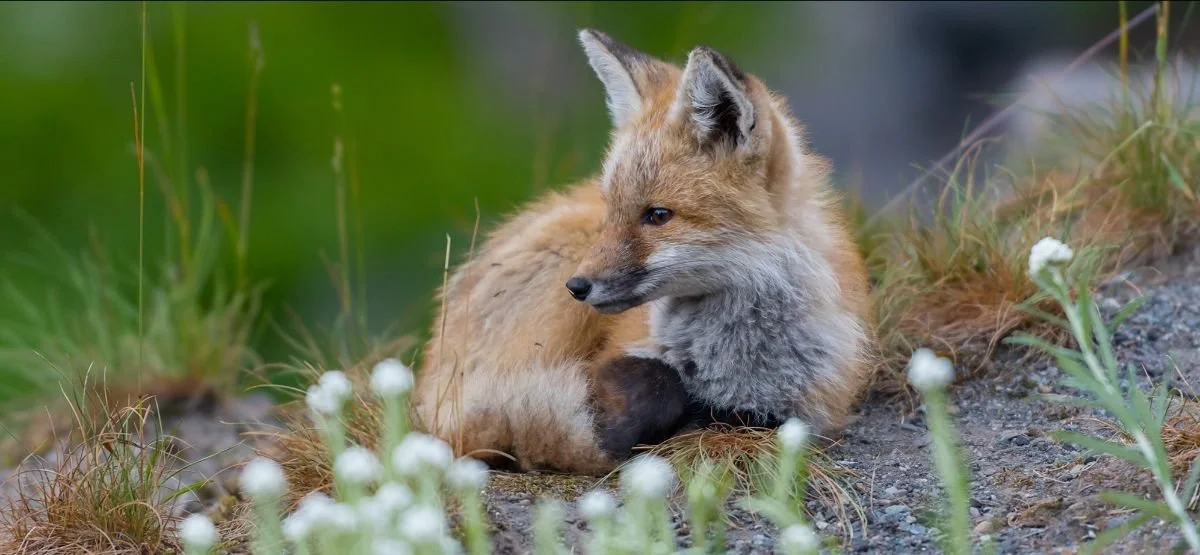
Starting in early September, our team began setting foothold traps to capture and collar new Cascade red foxes, building on the research of PhD student Nathan Redon that we have shared over the past three years. The field work this year is led by Heather Rolph, a new University of Washington M.Sc. student and former CCP field crew leader. She is working closely with our CCP field team (Nate and Piper), Yakama Nation wildlife technicians, and state wildlife biologist, Chad Norris. The work is carefully overseen by the state wildlife agency to ensure great care is taken when trapping and handling foxes.
The effort was joined last month by visiting researcher Matt Kynoch. Matt is currently a wildlife researcher at the University of Alaska Fairbanks and has studied the movement ecology and energetics of Canada lynx in the Brooks range of Northern Alaska. He also has extensive experience trapping red foxes in the eastern US. Check out Matt on instagram @m_c_kynoch
And the results are worth celebrating!
Together, the crew successfully captured and GPS-collared three new foxes deep in the heart of the South Cascades wilderness: one on Mount Adams and two in the Goat Rocks Wilderness.
Given the subspecies' rarity and the sheer labor of hauling gear into the high-altitude subalpine ecosystems these foxes call home, this is a significant achievement. It's a great start to this new work and we are excited to not only learn where these foxes call home but also see new individuals join the study over the next year.
The newly deployed GPS collars will contribute to both Nathan and Heather's projects, and will shed invaluable light on habitat use, reproduction, survival, and other behaviors. The goals of the larger study are to understand which parts of the mountain ecosystem are critical to supporting Cascade red foxes and what threatens their persistence in these places.
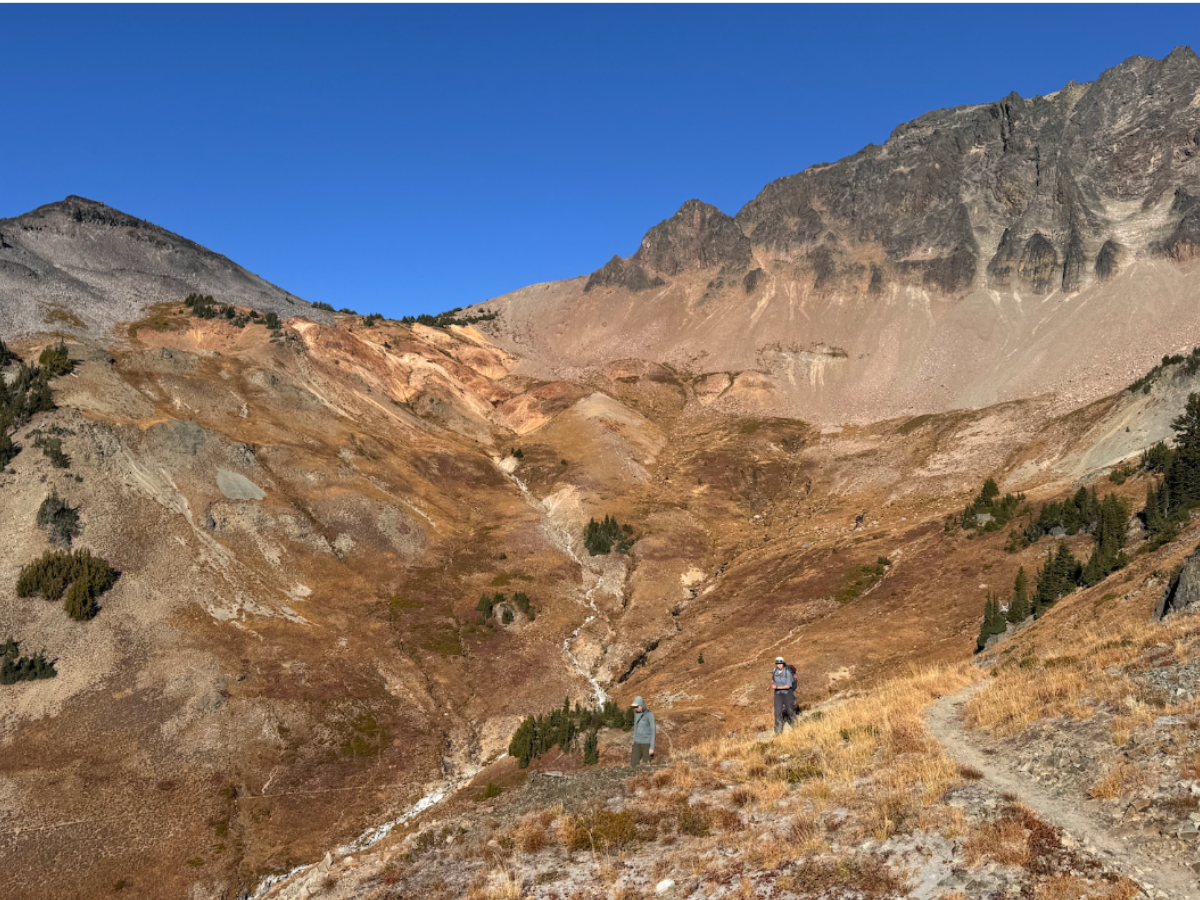
Heather and field technician, Piper Spiro checking fox traps in Washington's South Cascades.