
Words and Photos By Gretchen Kay Stuart
When it comes to the Cascade Mountains, we always expect the unexpected. But we hadn’t predicted the obstacle course that awaited us on the slopes of Mt. Adams last month!
Thanks to a new collaboration funded by the America the Beautiful grant, our team has joined forces with the Yakama Nation’s Wildlife Resource Management Program to conduct meadow surveys in Washington’s high-elevation ecosystems. The mission? To better understand subalpine meadows and, by extension, figure out how to protect the endangered foxes that roam them.
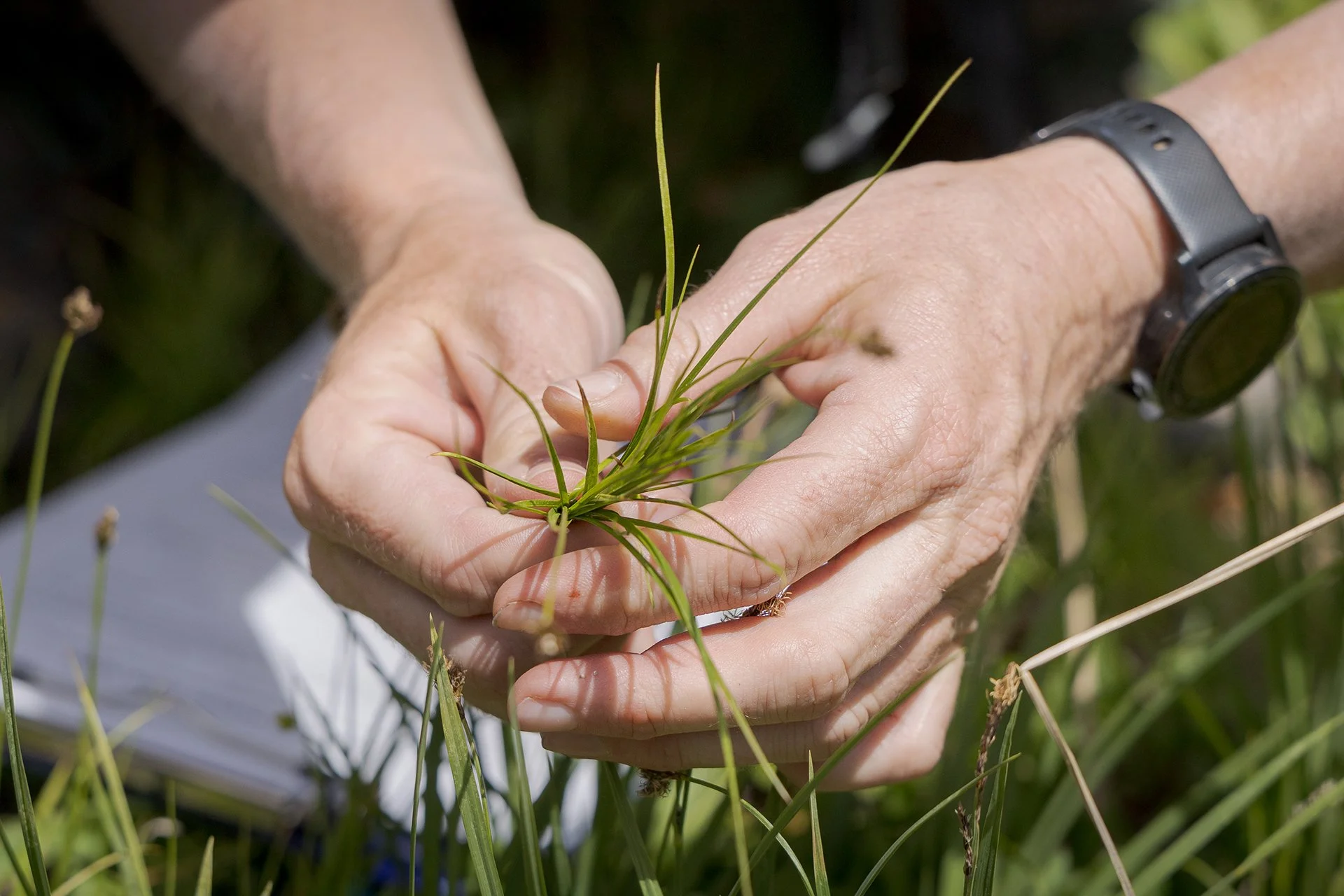
Sedge identification on Mt. Adams
Our summer field season began with a journey upslope that was halted by multiple downed trees blocking the roadway. Casey, a technician with the Yakama Nation’s Wildlife Resource Program, came prepared. He fired up a chainsaw and cleared the way while the rest of the team moved smaller logs and debris. Conservation isn't just about data; sometimes, it’s also a willingness to chip in with a bit of hard labor.
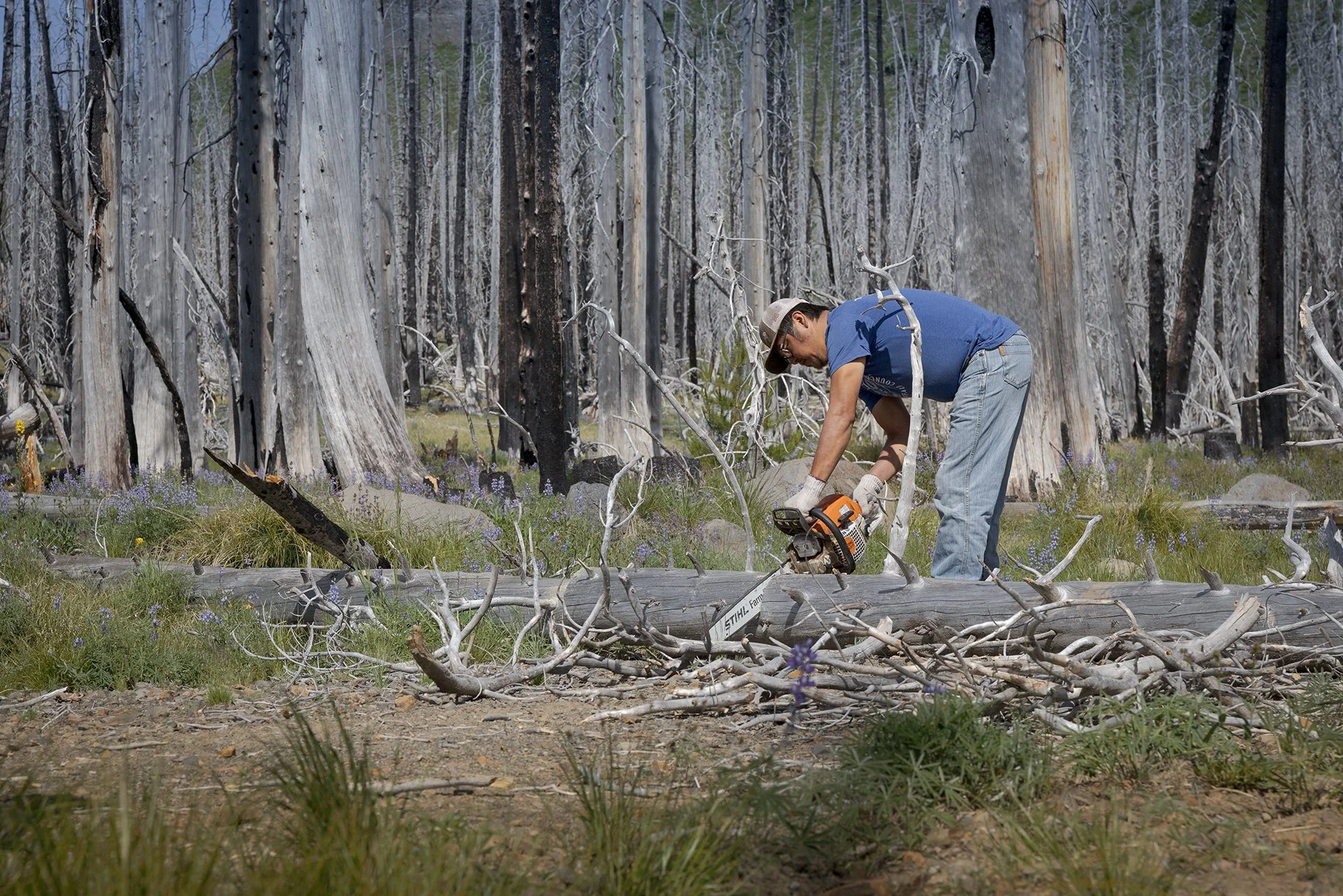
Casey removes downed trees from the road that leads to trailheads on the Yakama Reservation
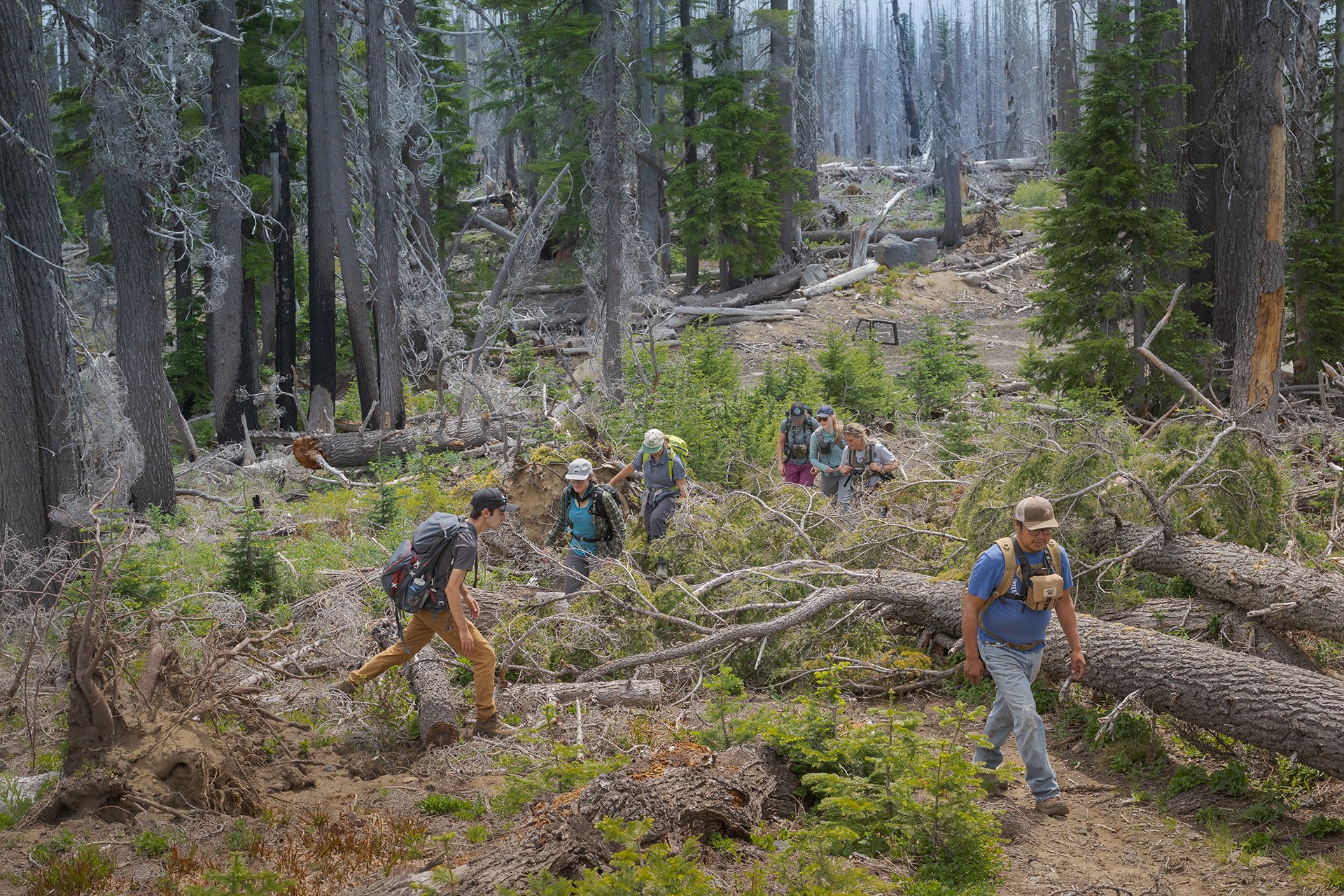
The team scrambles over and around downed trees along the trail leading to subalpine habitat
Once we parked, the real work began. We scrambled over more downed trees on the trails, carrying backpacks full of field guides, trail cameras and scat kits. The mosquitoes arrived a month early and in vicious numbers. As the heat of the sun intensified, we reluctantly added layers, slapping our necks while scanning the trails for Cascade red fox scats to collect as well as locations to deploy monitoring stations. Despite the blood loss, the energy on the team was electric. We had a unique mix in the field: Native plant experts walking side-by-side with carnivore specialists. It was a crash course in cross-disciplinary knowledge.
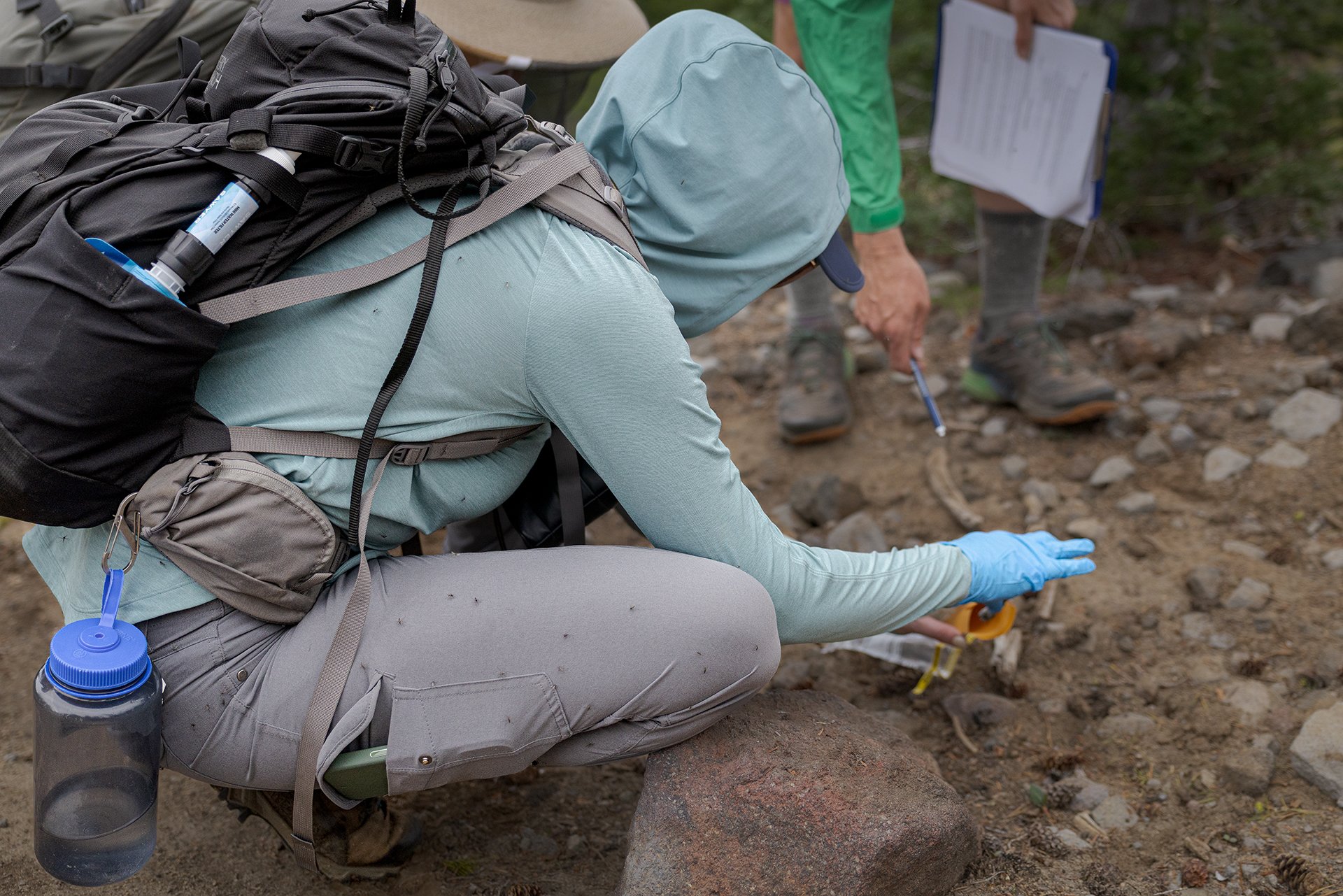
Krysten is covered in mosquitoes as she collects a fox scat
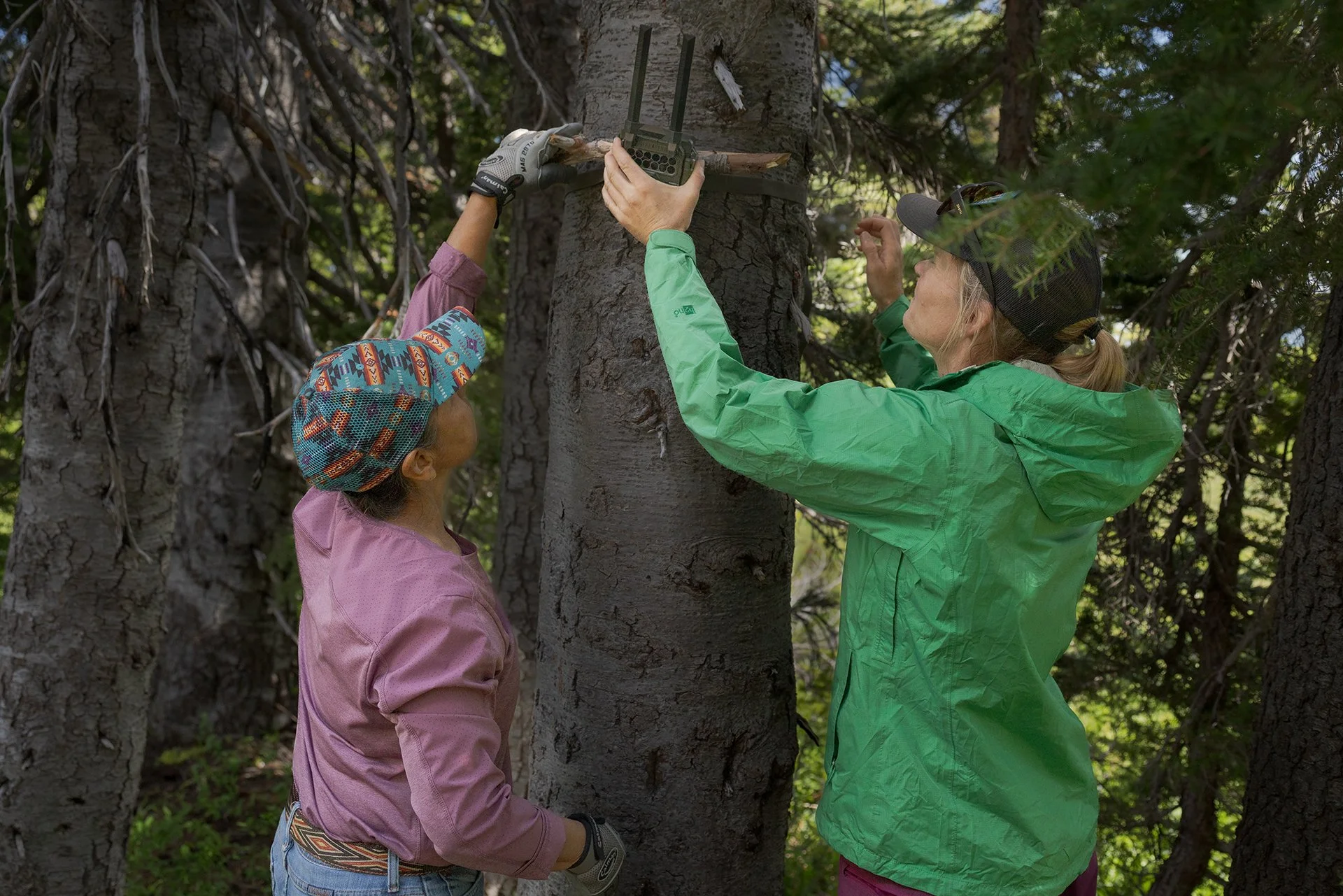
Pat and Jocelyn set up a trail camera at a monitoring station on the Yakama Reservation
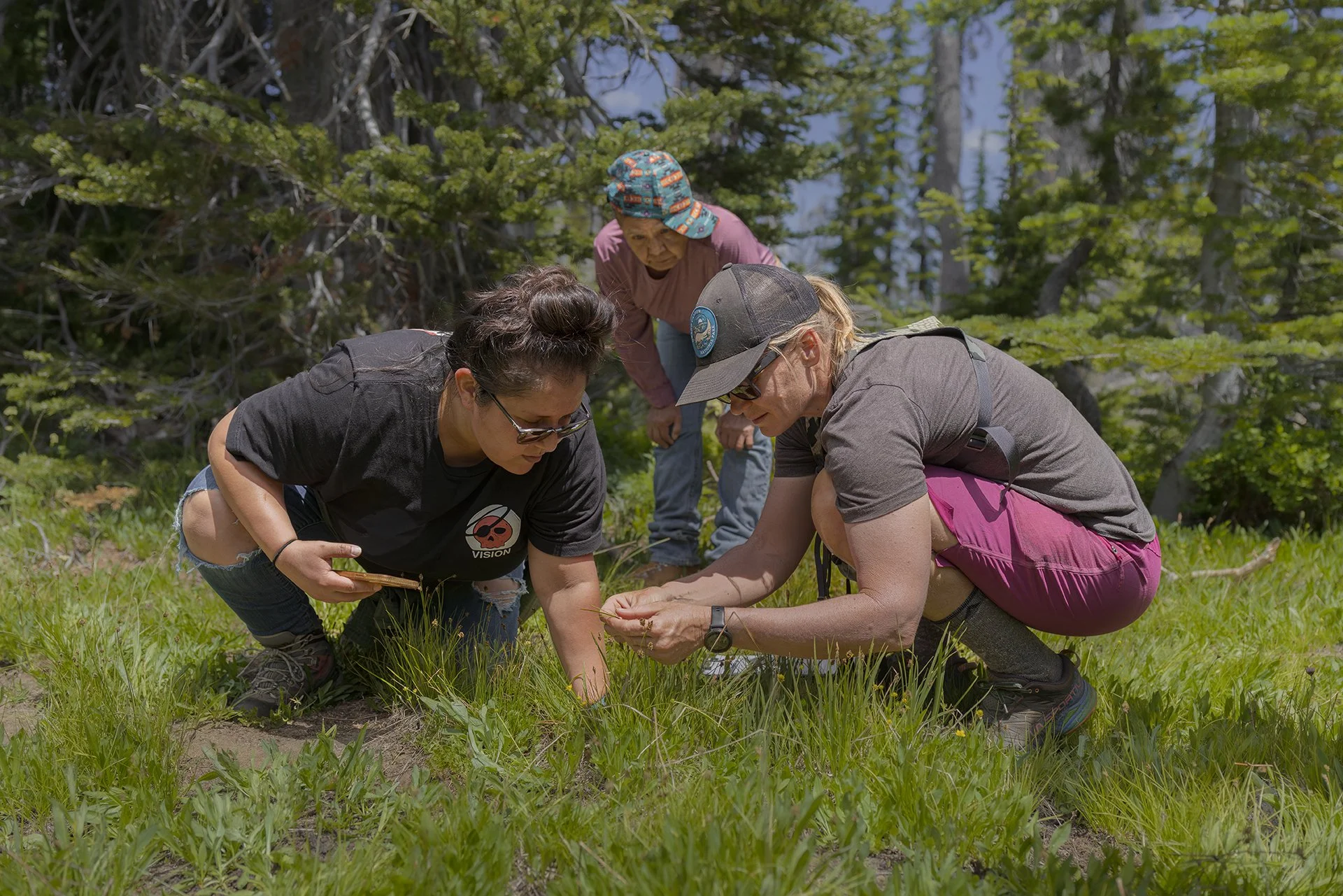
Mt. Adams is a mosaic of wet sedge meadows, dry wildflower fields, and rocky talus slopes. These meadows are the life-force of the landscape. We documented conifer encroachment, identified sedge species, and classified meadow types while searching the ground for vole latrines and pocket gopher mounds. These data are crucial because habitat connectivity is key. If the meadows shrink or shift, the prey species shift. If the prey shift, the carnivores must follow, sometimes bringing them into conflict with human development or roads. By mapping these meadows, we hope to identify potential bottlenecks and buffers. We are learning what ideal Cascade red fox habitat looks like and what we can do to conserve it.
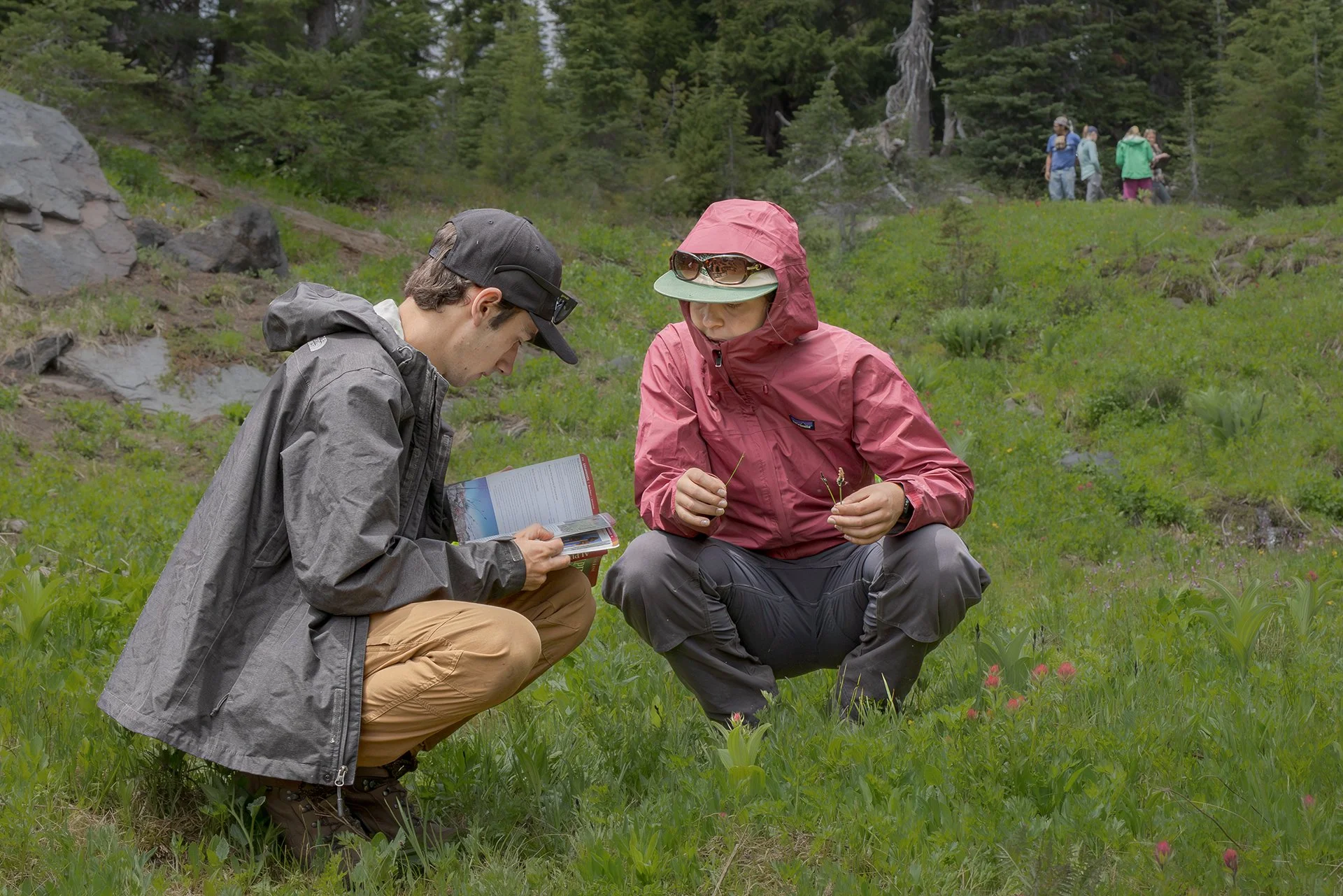
Nate and Piper identify plant species in a subalpine meadow
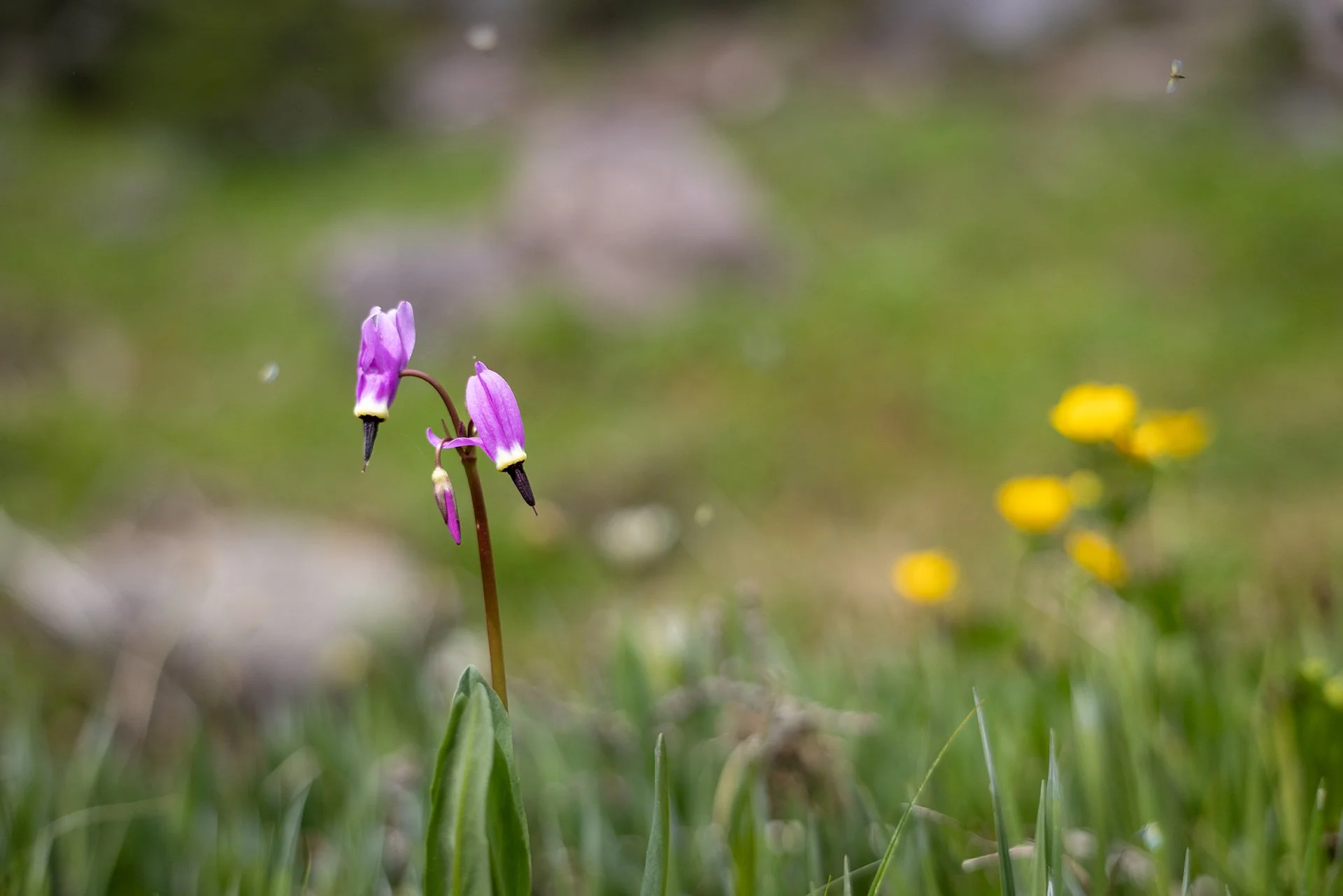
Wildflowers are beginning to fill the meadows in Cascade red fox habitat
After two full days of training and trekking, we left the mountain tired, covered in sweat and bug bites, but smiling. The camaraderie and friendships formed are the ‘icing on the cake’ as we enter an exciting summer ahead and continue this important work. Minus the fallen trees, we hope.
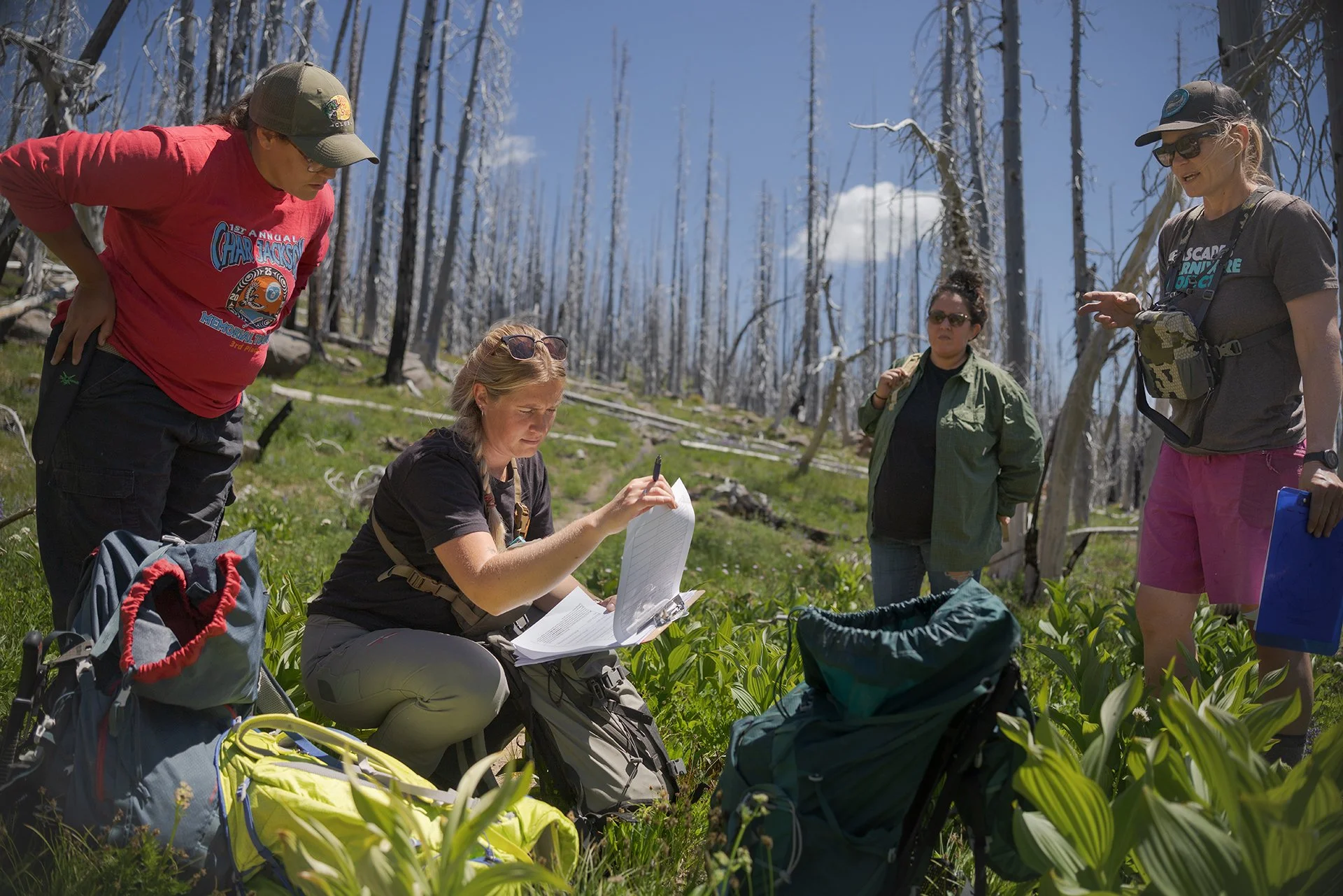
Yakama Nation and Cascades Carnivore Project wildlife biologists kicking off the summer field season on Mt. Adams