
Words by Gretchen Kay Stuart
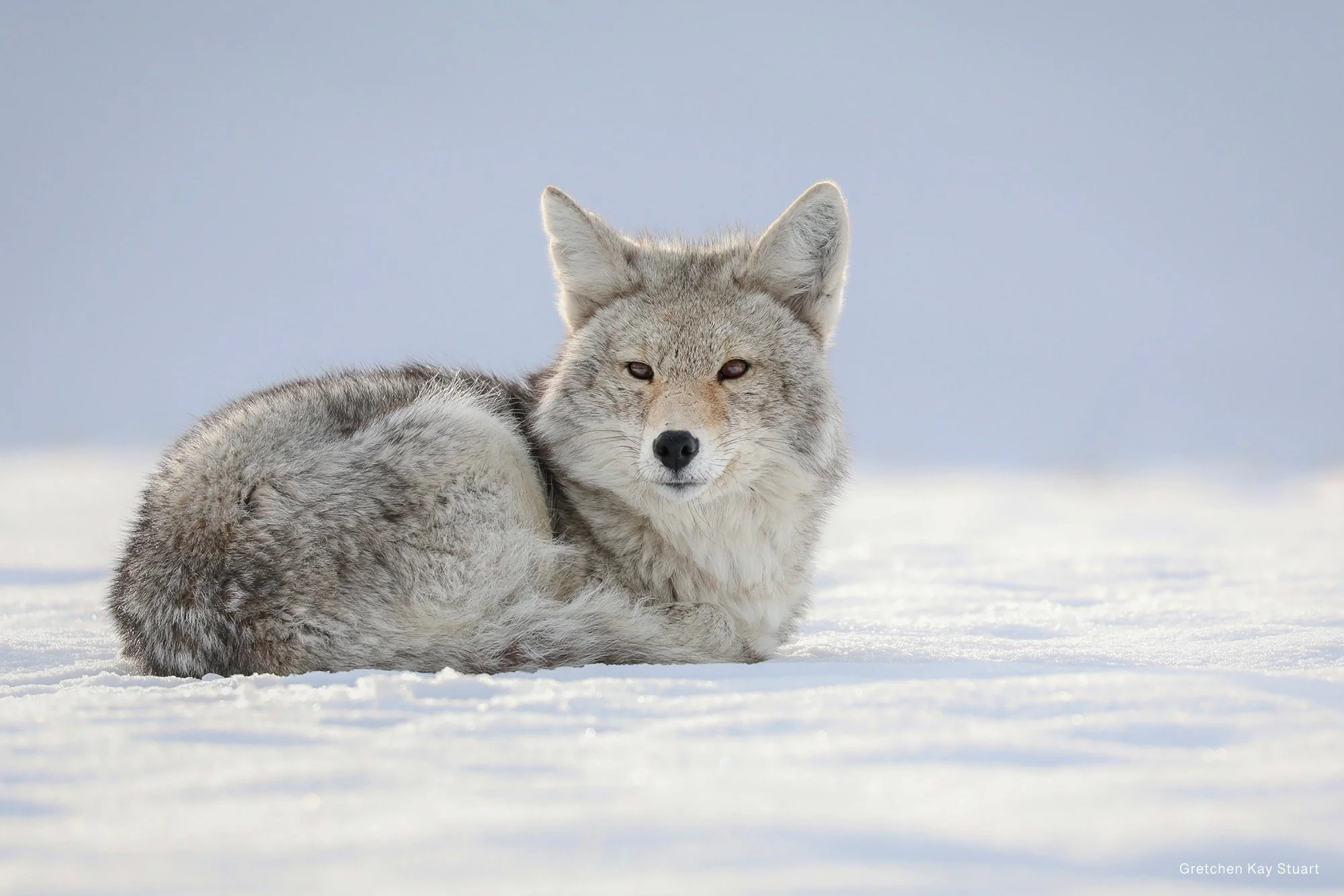
Coyotes and red foxes do not typically get along. Research in Yellowstone National Park showed that these two canid species can coexist, but coyotes sometimes kill foxes. This suggests the potential for coyotes to be a significant source of mortality for the endangered Cascade red fox here in our study area. Coyotes likely kill foxes not primarily for consumption, but to reduce competition for shared resources such as food and space (i.e. a home range).
How has the Cascade red fox managed to persist when coyotes are increasingly found in their home ranges? The answer may lie in the snowpack.
One reason the Cascade red fox chooses to inhabit high elevations of subalpine parkland is likely to avoid predators that cannot navigate deep snow. The Cascade red fox’s small body mass and dense fur between toe pads allows them to move effortlessly across the snow’s surface. Coyotes lack these adaptations. They sink deeper into the snow, making it exhausting and inefficient to hunt. Imagine wading through waist-high powder versus wearing snowshoes.
Reduced competition for snowshoe hares and other prey, combined with a safe place to den and raise kits, were likely the conditions that allowed the Cascade red fox to persist in their harsh winter range for hundreds of thousands of years. But with the climate warming, the snowpack diminishing, and increased winter recreation creating hard-packed trails, coyotes now appear to be accessing Cascade red fox habitat year-round, sparking concern for this endangered fox’s survival.
This year, the Cascade Mountains experienced record lows in snowpack, and our monitoring stations showed that coyotes frequented high elevations throughout the entire winter.
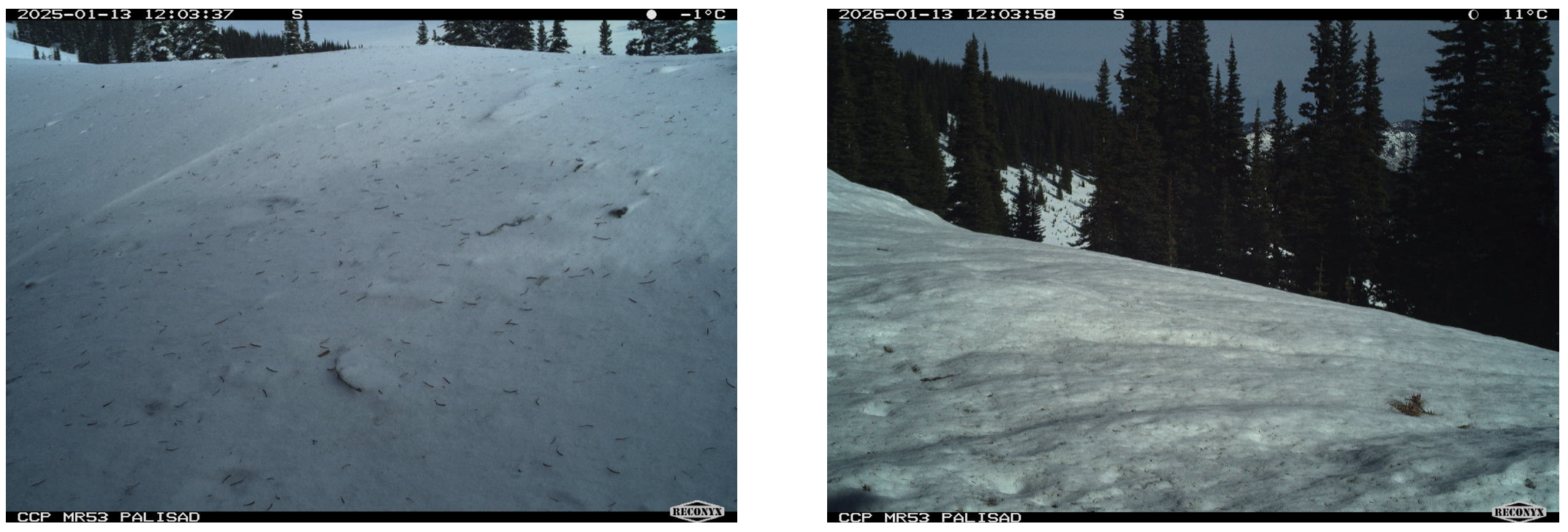
January 13, 2025 (left) shows typical snowpack in high elevations of the Washington Cascades. Exactly one year later in 2026 (right), snowpack is alarmingly low.
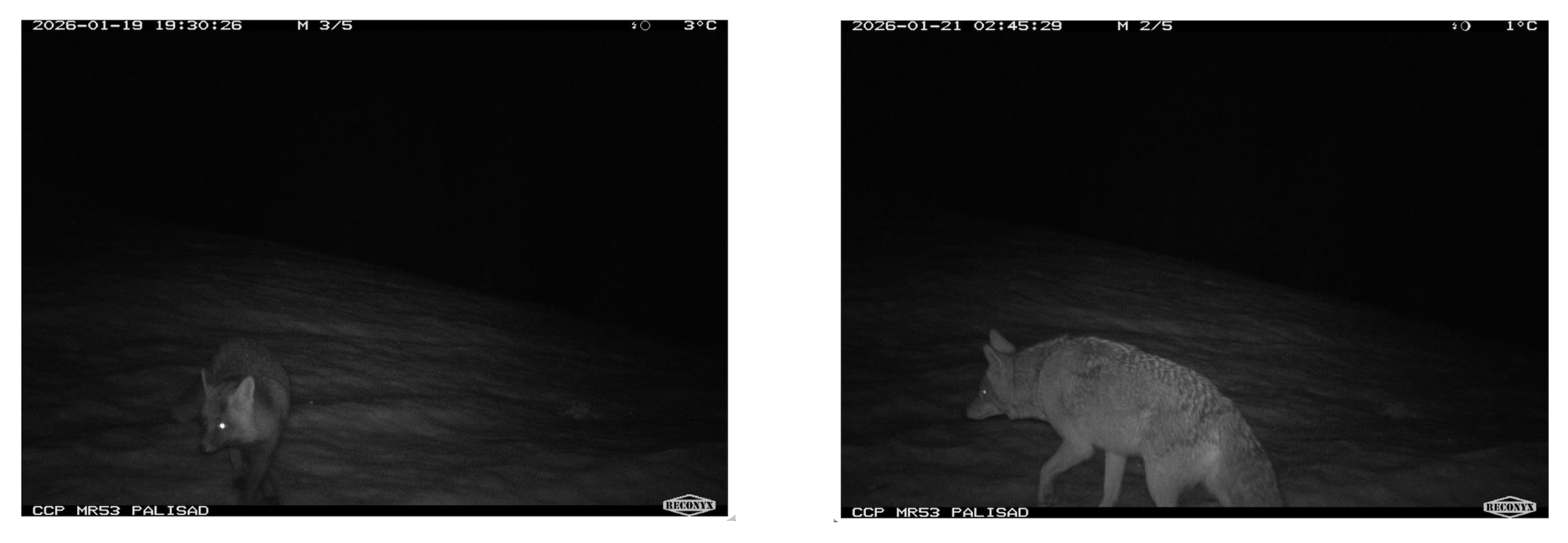
On 1/19, a Cascade red fox passes by our monitoring station. Two days later, a coyote appears to follow the fox's scent into the trees.
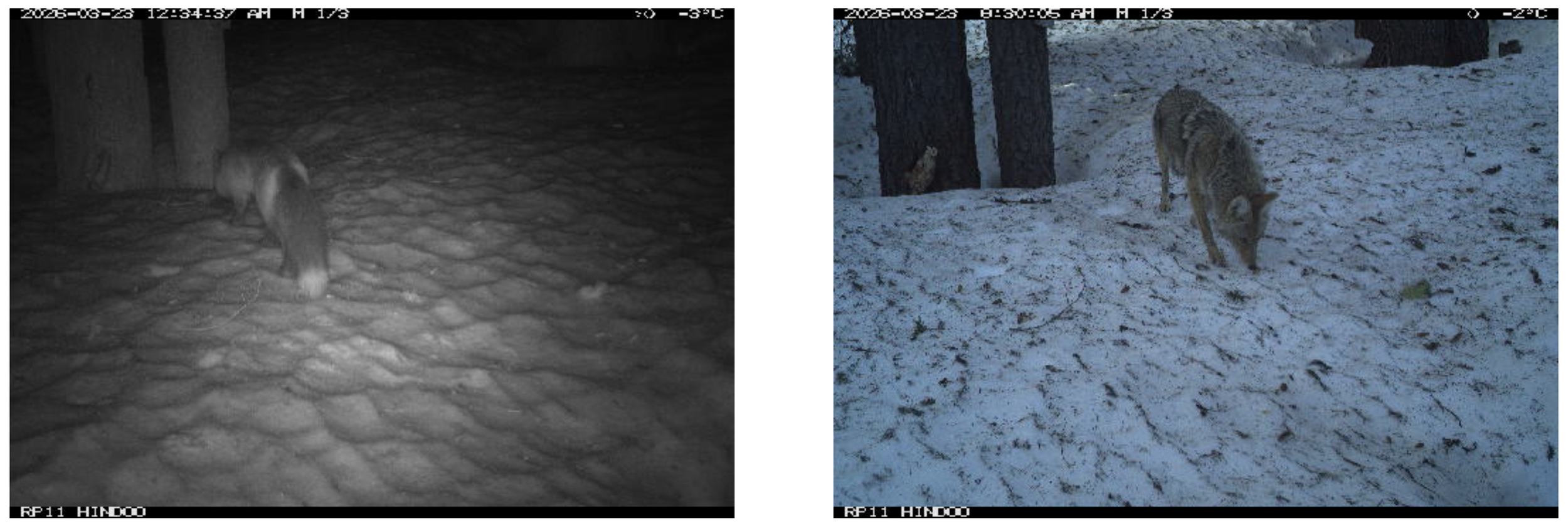
On 3/23, at a separate monitoring station on a different mountain range, another example of a coyote appearing hours behind a Cascade red fox is recorded.
This evidence raises concerns. Is climate change removing the shield that allows an endangered fox to coexist with a dominant competitor? What can we do to help the Cascade red fox recover?
Several courses of action can be taken. At the policy level, voters can support local candidates committed to climate action, endangered species protection and research funding. Although individuals cannot directly influence snowpack conditions, other meaningful conservation measures include advocating for rodenticide bans and removals, and educating communities about the risks of feeding foxes which leads to roadside begging and car strikes.
This rare, resilient fox can still have a path forward. Let’s make sure they call these mountains home for generations to come.