
Words and Photos by Gretchen Kay Stuart
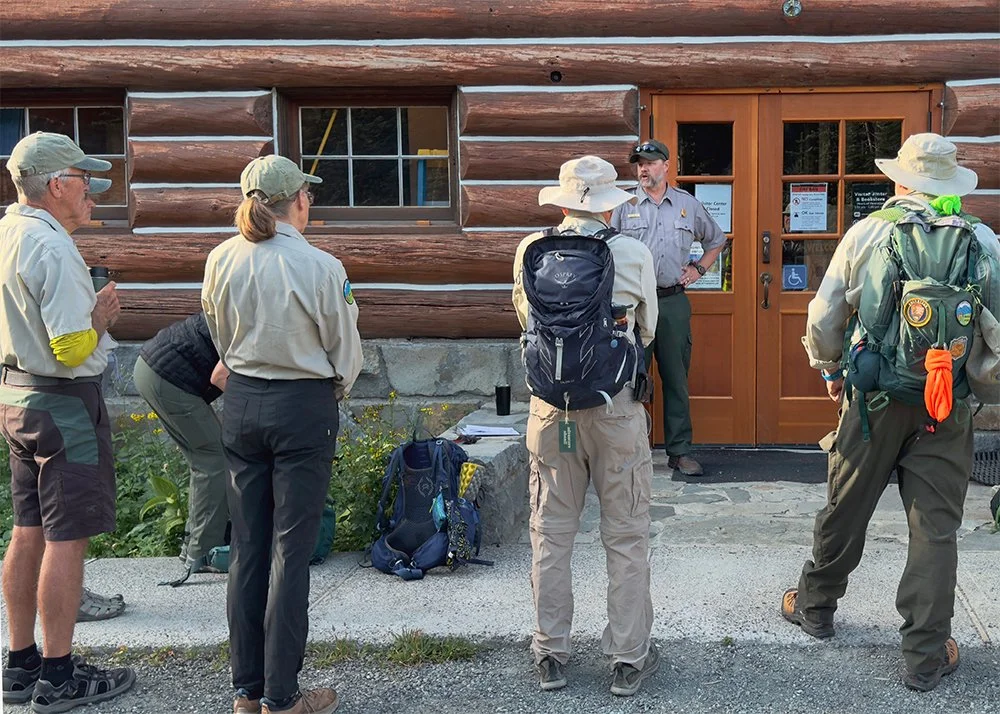
Let’s hear it for the Meadow Rovers!
Last year, I had special access to conduct daily observations of endangered Cascade red fox kit rearing at the first successful den site found within Mount Rainier's park boundaries since 2017.
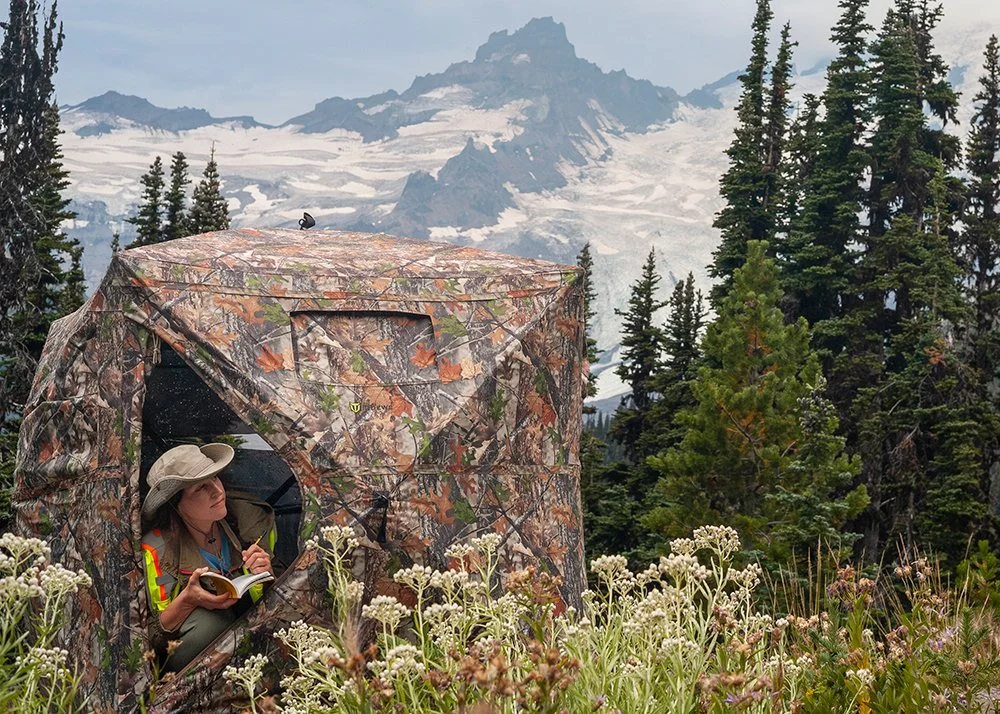
Gretchen observes endangered Cascade red fox kits from a blind, recording detailed field notes.
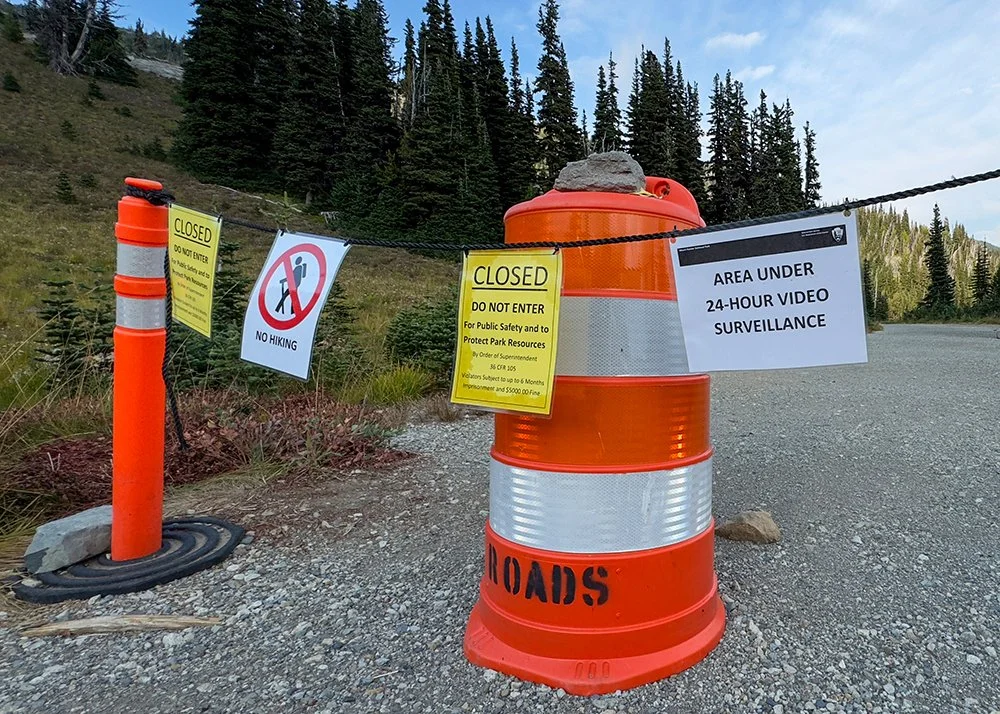
Following the identification of the den site, the park’s Resource Manager, Sallie Beavers, and Superintendent, Greg Dudgeon, swiftly implemented trail closures to mitigate risks of human habituation and food-conditioning. Violators risked up to 6 months jail time and a $5,000 fine.
This management action was reinforced by Ranger David Divelbiss and his phenomenal team of volunteer Meadow Rovers who stood guard day and night at every closed trailhead to ensure the orders were respected.
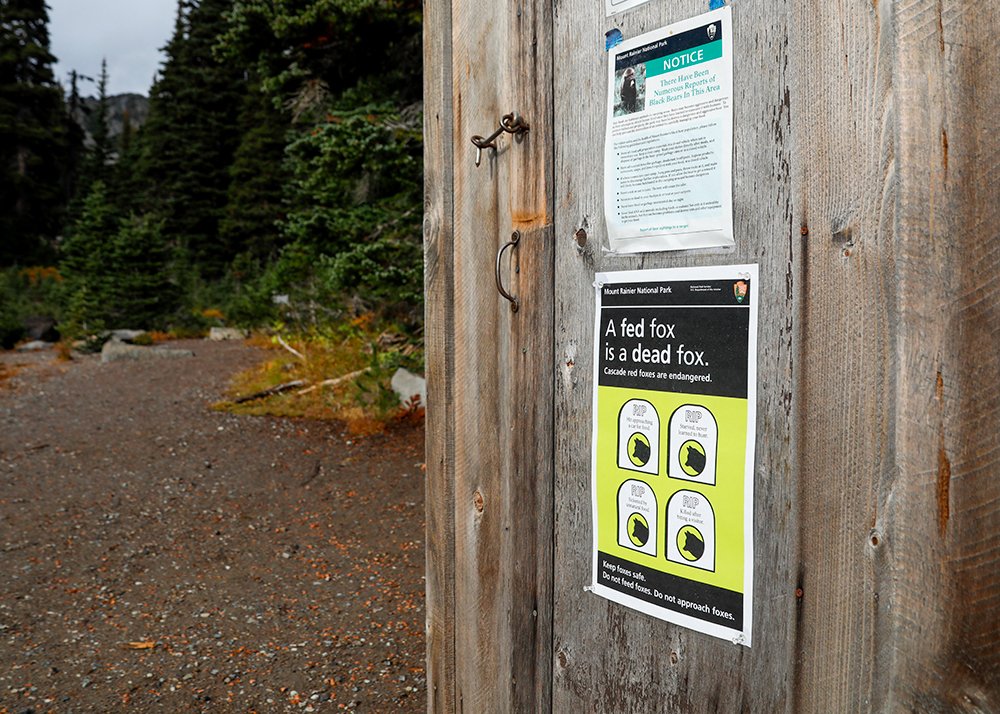
One of the greatest threats faced by the Cascade red fox is car strike fatalities due to food-conditioning. Foxes that are fed even once by visitors start viewing humans as easy meal tickets. Eventually, they are lured to roads where encounters are more frequent, and the foxes are often struck and killed.
I believe it is because of the incredible effort by NPS staff and volunteers that all three kits survived and matured into thriving juveniles. By winter, they dispersed into the Cascades wilderness to establish territories and find mates, pushing their unique subspecies a meaningful step back from the brink of extinction.
This success stands in stark contrast to the tragic loss of a separate litter to rodenticide poisoning at a nearby ski resort. It underscores just how vital our National Parks are for the survival of endangered species, and reaffirms the importance of keeping our public lands funded and protected.
A heartfelt thank you to the dedicated NPS staff and Meadow Rovers who made this conservation achievement possible!