
Words and Photos by Gretchen Kay Stuart
As the changing climate continues to warm our planet, those affected will reach far beyond disappointed skiers in Washington’s Cascades this winter. According to the latest data from the U.S. Department of Agriculture, Washington’s snowpack currently holds just 52% of its normal water volume, with little relief on the horizon.
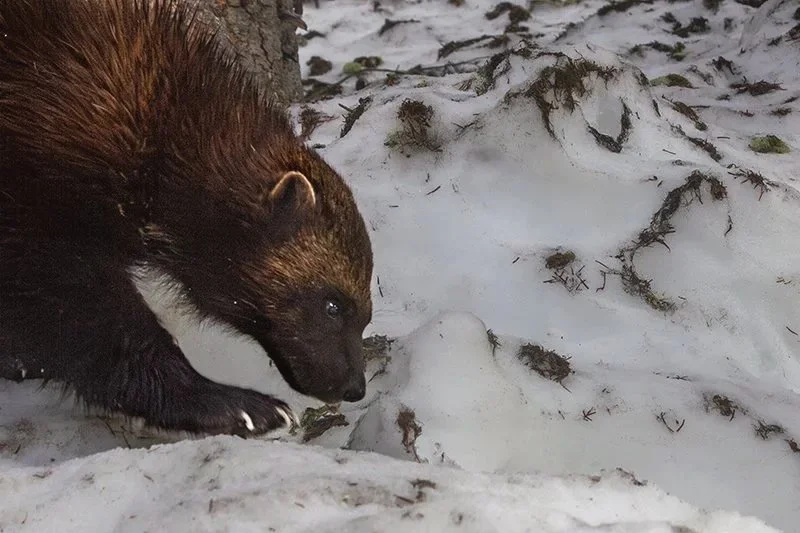
We often discuss snow in terms of what it means for us: reservoirs, irrigation, and the increased wildfire risk that comes along with drought. For wolverines, this shift poses challenges as well. Deep snowpack is important for reproduction and kit survival.
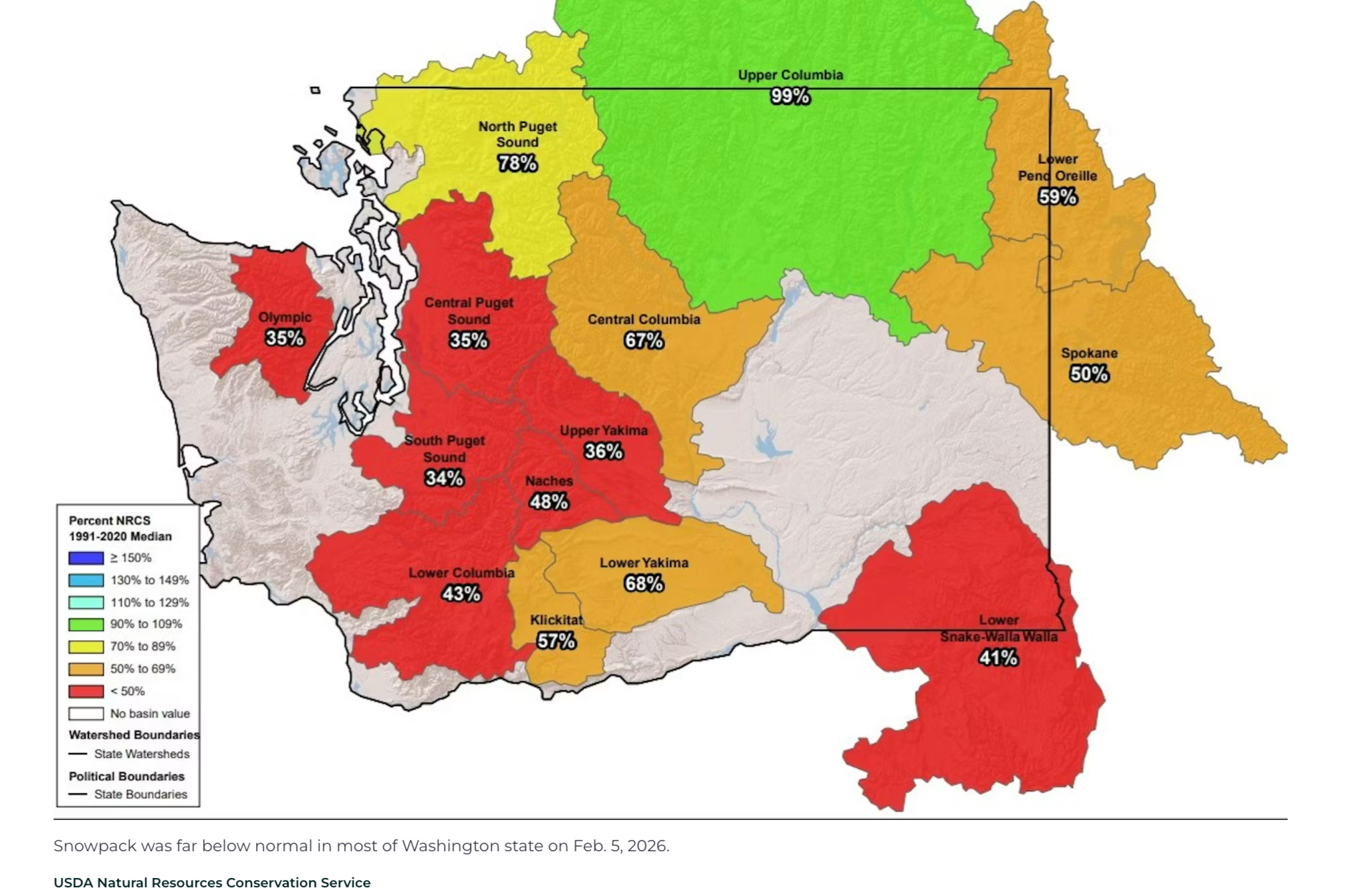
Wolverine habitat in our study area has only received 34% of its annual snowpack as of February 5, 2026.
Around this time of year, wolverines give birth in dens carved not into soil, but into deep snow that persists until late spring when their kits are strong enough to start traveling with their mothers. These are not simple holes. They are intricate chambers dug into drifts that provide stable insulation against surface temperatures. The subnivean (under-snow) environment maintains a constant temperature near freezing, regardless of whether the air above is 0°F or 40°F. For wolverine kits, that stability is the difference between life and death.
Warm conditions in the Cascades create rain-on-snow events. When warm rain trickles through the snowpack, it adds weight and destroys the insulating properties of deep, fluffy snow. Wet snow can also collapse the subnivean world entirely, which wolverines and other carnivores rely upon for some of their prey.
Wolverine mothers also must plan ahead and find food for themselves and their kits when they are young and unable to leave the den. They sustain themselves in part on caches of meat stored in the snow, for example, in tree wells, which act as refrigerators to preserve their food for longer periods of time. They will stock these refrigerators in early winter before kits are born. If the refrigerator fails, the meat can thaw and rot, forcing wolverine mothers to find food elsewhere.
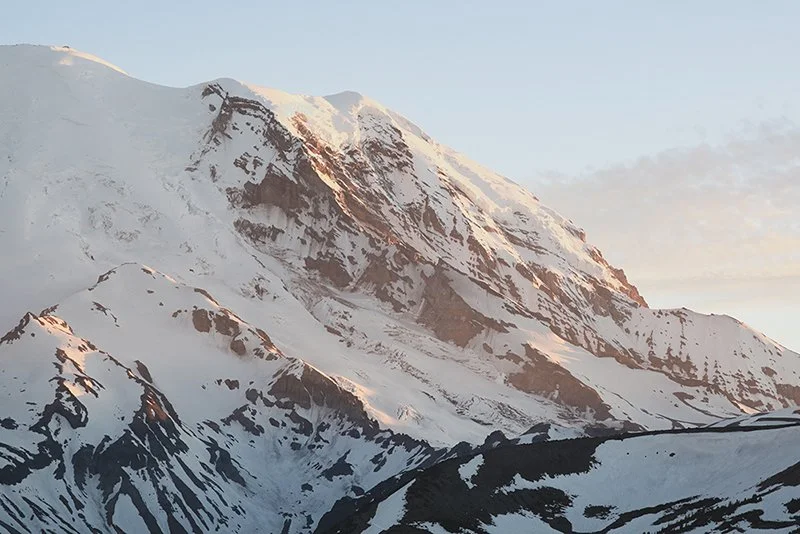
Wolverine habitat in the Washington Cascades alpine.
Despite these challenges, there is hope. The female wolverine in our study area has consistently reproduced with success. At least one of those offspring dispersed to Oregon and perhaps traveled further to the Sierra Nevadas where a wolverine was recently detected.
What can we do? There are many small changes to diet and lifestyle that can add up to great impact. But most importantly, we can vote in local elections. Ask that our state representatives prioritize climate change and protection of our public lands and the Endangered Species Act. Educate friends and family about the importance of biodiversity, and encourage them to vote, too. With effort and time, we just might succeed in turning things around not only for the wolverine, but for all life on earth.