
Words by Gretchen Kay Stuart
The wolverine is often perceived as a dangerous, solitary predator evoking concern or disdain. But this rare carnivore has been profoundly misjudged. Recently, researchers have been noting that wolverines are not as solitary as once presumed, and the family we research has been breaking this stereotype, transforming these feared and misunderstood mustelids into the endearing, relatable mammals that they truly are.
Cascades Carnivore Project has been documenting wolverine reproduction since 2018 when kits were born in Washington’s South Cascades for the first time in over a century. Female wolverines typically give birth every year or two, provided their midwinter body condition is strong. But Joni, the rock star mama of Mount Rainier, reared four consecutive litters including triplets in 2023. After taking one year off from motherhood in 2024, she raised a single kit in 2025. As thrilling as it has been to document wolverines repopulating Washington’s Cascades, the social behavior this family has demonstrated is just as groundbreaking.
In 2023, Joni brought her 4 to 5-month-old triplets to one of our monitoring stations where they were caught on video with her mate, Van, roaming around as a family unit. Male wolverines were once thought to abandon their families, only meeting up with females to mate. But we have evidence of Van playing a fatherly role, possibly offering some indirect protection and sharing food resources as his kits follow him around their mother’s territory.
These bonds extend beyond weaning. While kits become independent by their first autumn, they often remain within their mother’s home range for an extended period. Young females have been found to establish territories adjacent to their mother’s or take over a portion of her range completely, as documented in Sweden. We believe Joni may have recently given up the western part of her territory to her daughter, Jackie.
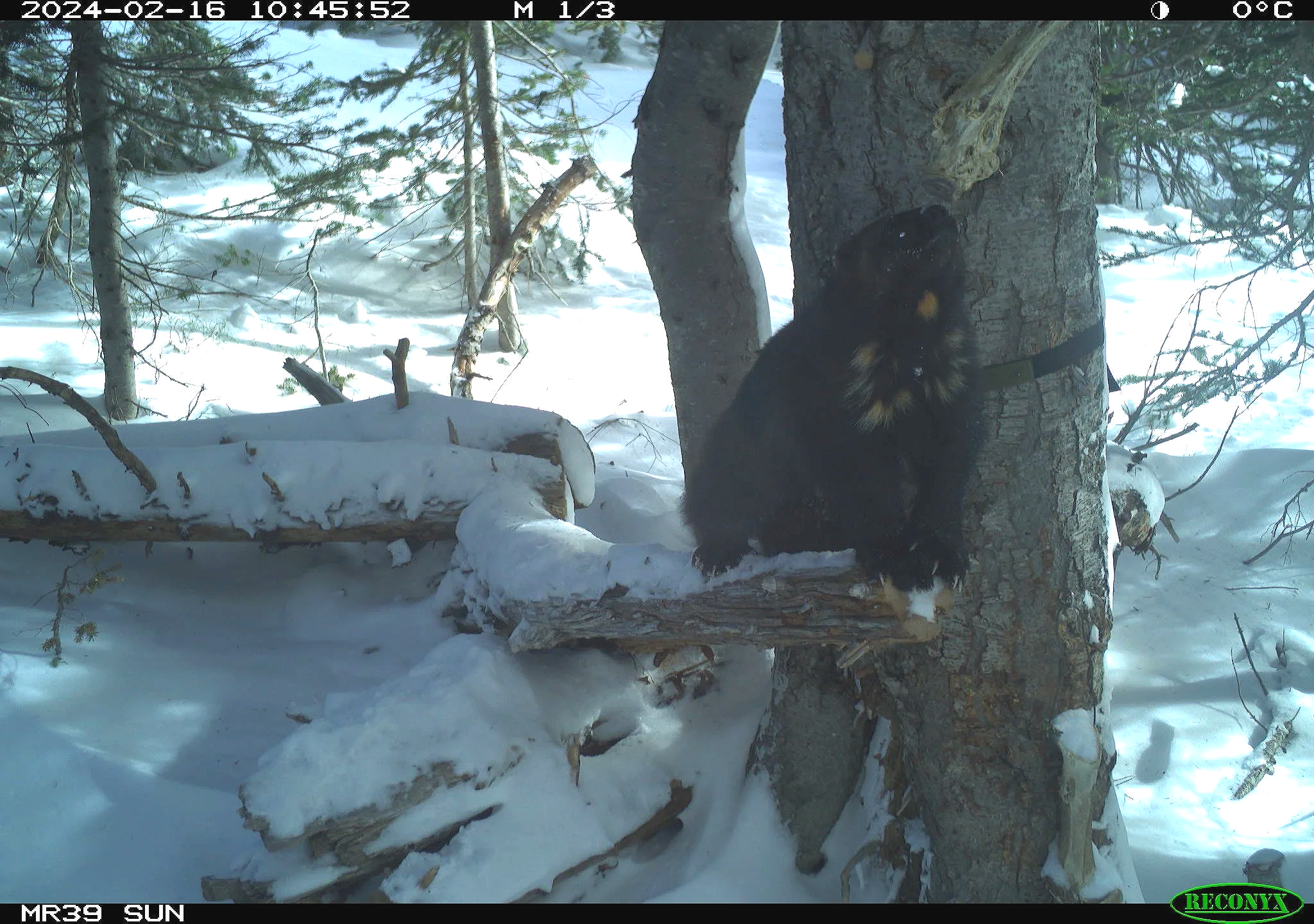
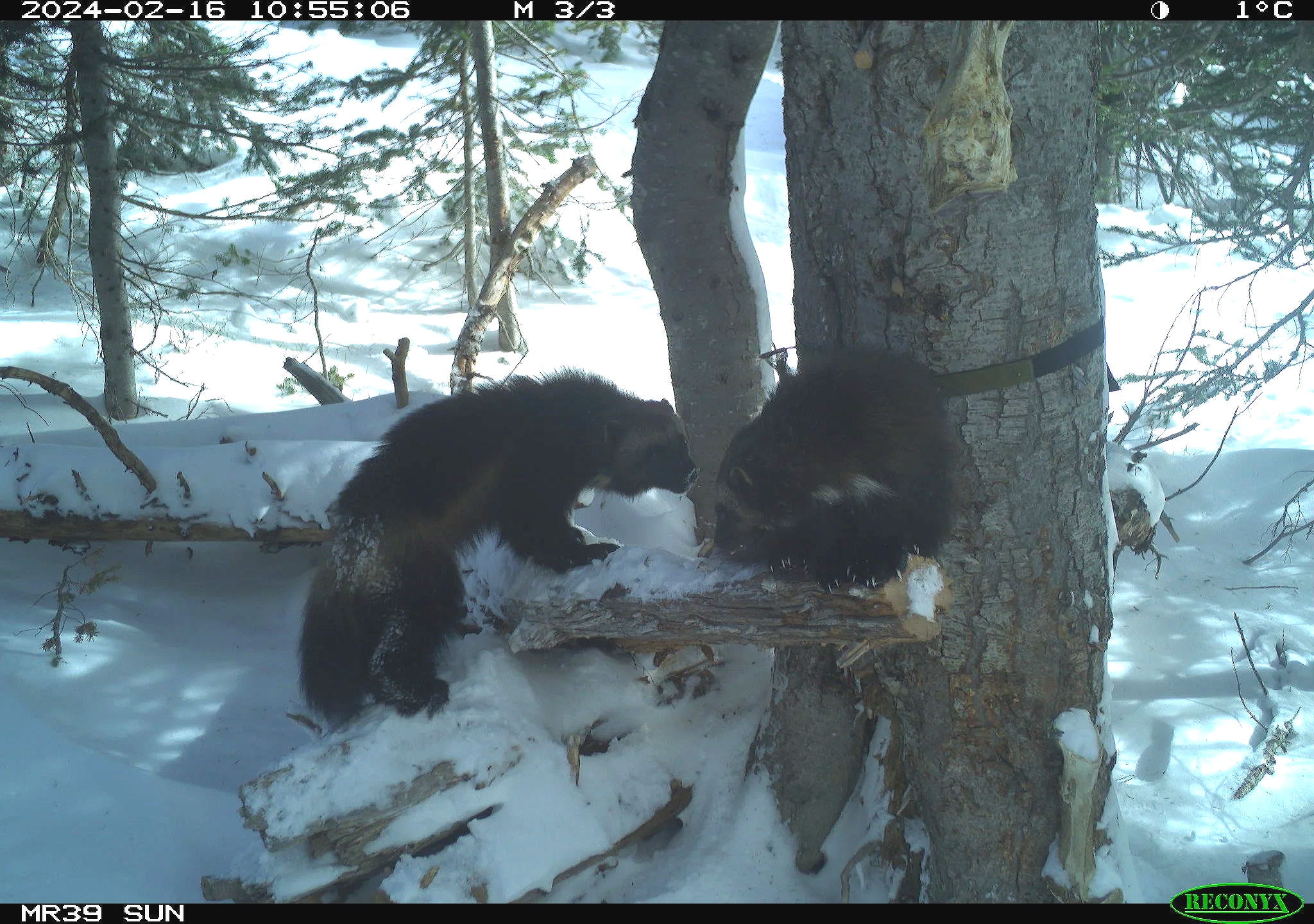
Equally fascinating, some wolverines appear to spend time with their younger siblings. Two-year-old Jackie was seen on camera with her one-year-old brother ten minutes after their father stopped by. We suspect the young wolverines follow each other as they make their way in the world, before dispersing to establish their own territories.
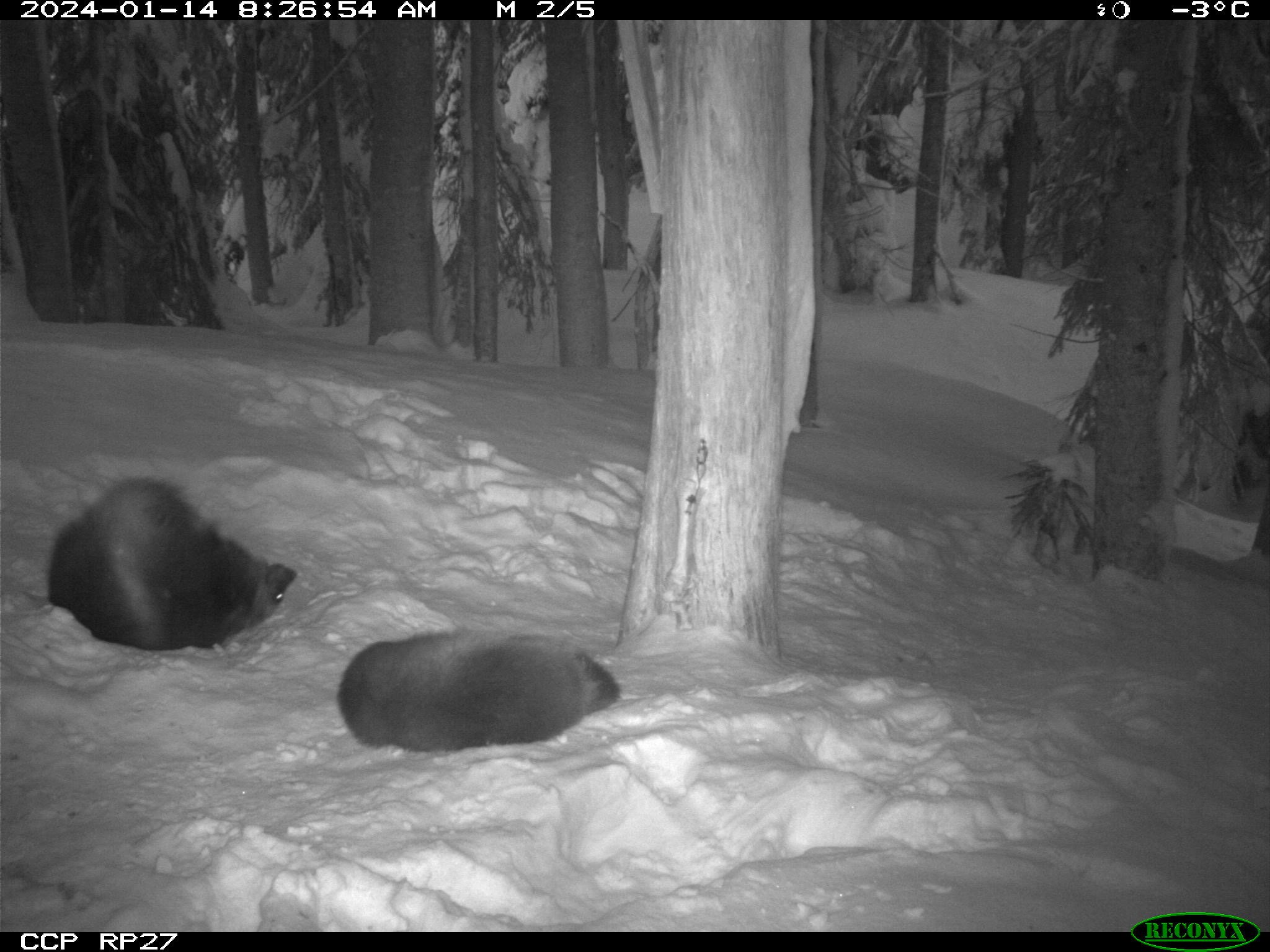

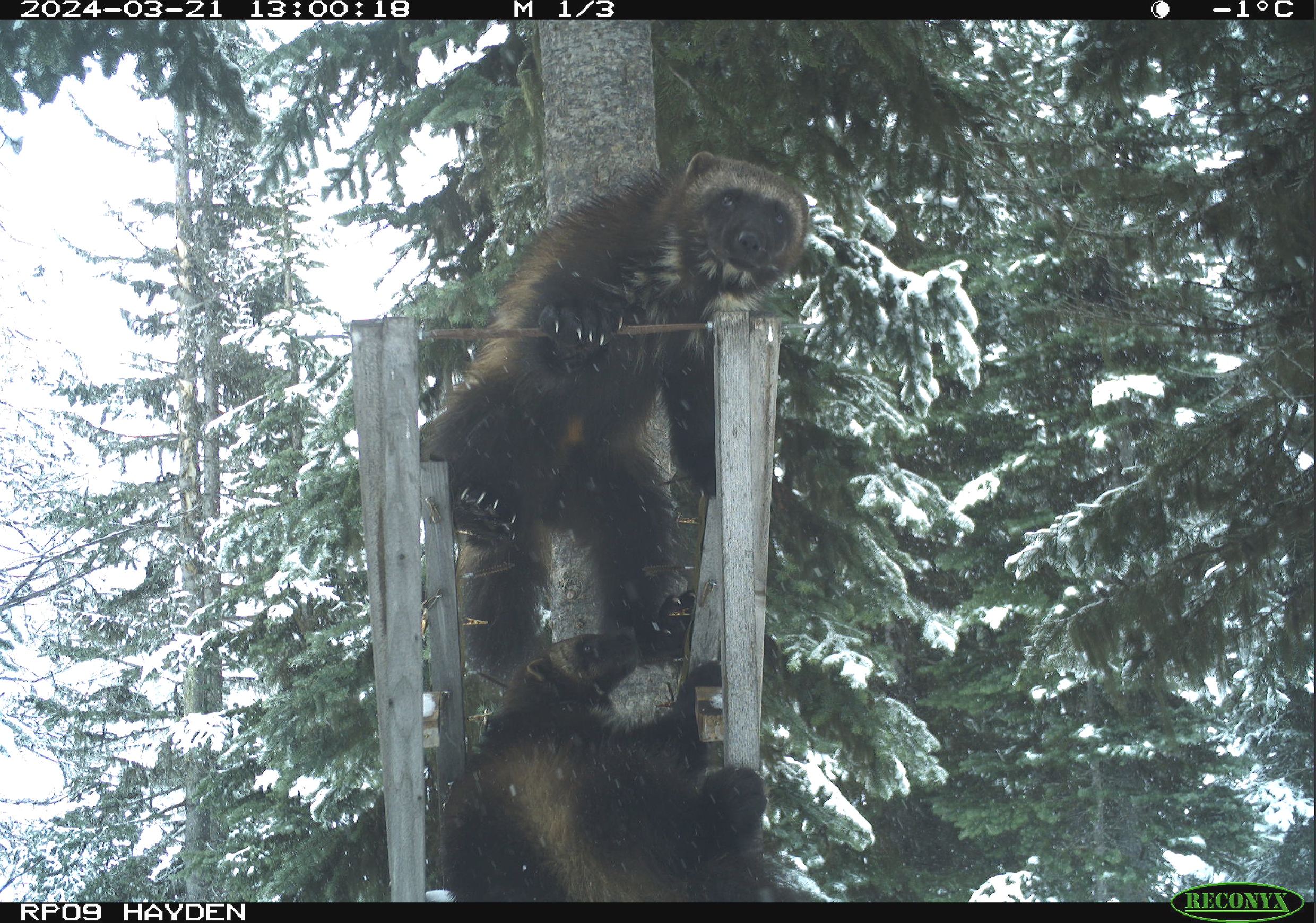
In 2024, 1-year-old brothers from the litter of triplets were still spending time together through rest and play. They spent three months interacting around our monitoring stations (also seen in the opening image) before leaving the area.
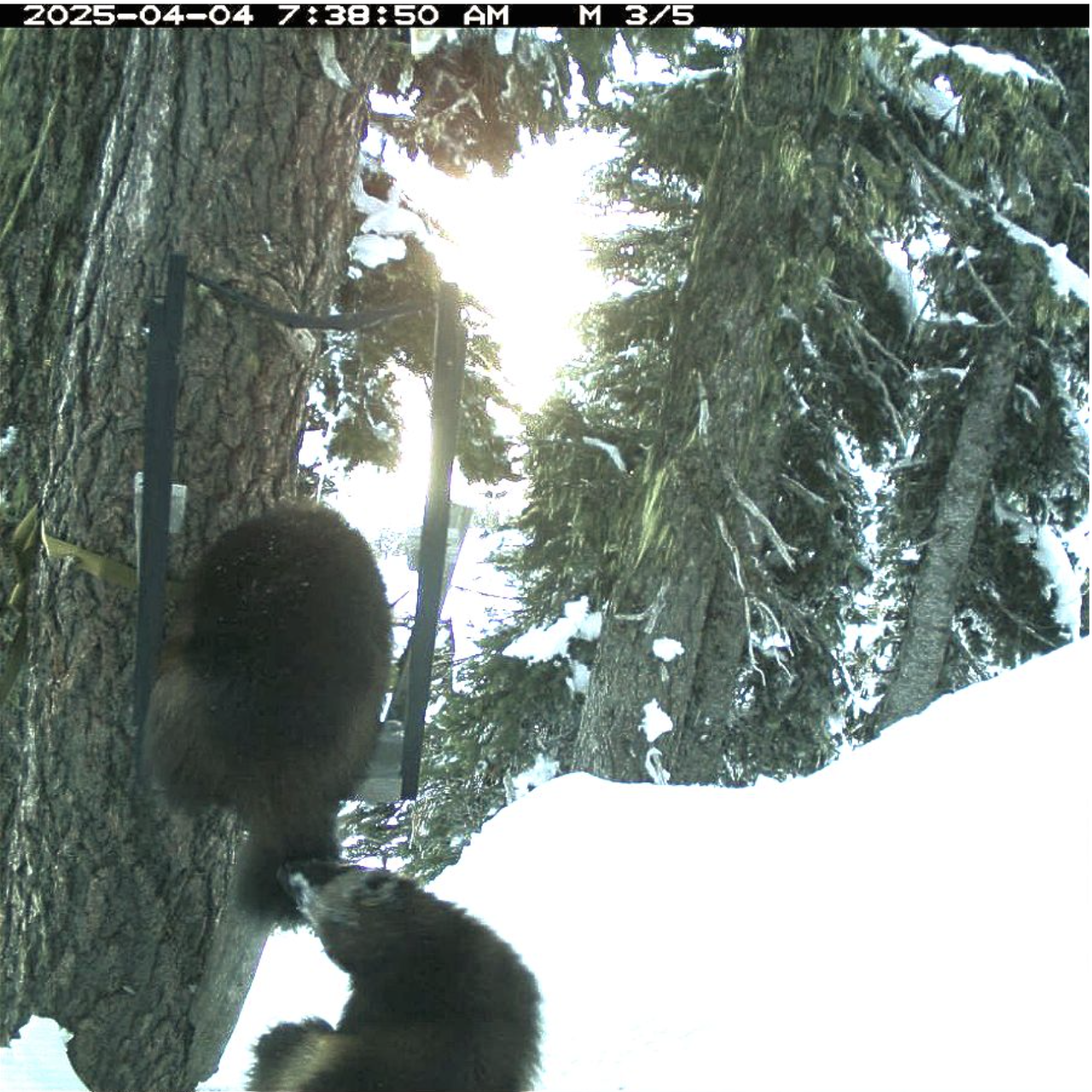
Van and Jackie playing at a runpole.
Last April, Van was spotted for the 2nd time enjoying what can only be described as a play date with his three-year-old daughter, Jackie.
Sociality in wolverines is mysterious with fragmented documentation. Van, Joni and their offspring give us a rare opportunity to delve into the depths of familial bonds. Because social behavior is a critical part of carnivore survival, biologists urgently want to learn more. These revelations prove the value of long-term research, and we look forward to documenting this family for many more years to come.