• Team
    • Board of Directors
    • Advisors
    • Alumni
    • Films
    • Events
    • Newsletter
    • Volunteer and Job Opportunities
    • Contact Us
  • Blog
  • In the News
    • Give Once
    • Give Monthly
    • CCP Gear
    • Matching Gift
  • Donate
Menu

Cascades Carnivore Project

Street Address
City, State, Zip
Phone Number
Our Mission: To study and restore Washington Cascades wolverine, cascade red fox, Canada lynx, and other threatened carnivore populations at risk of extinction and the mountain ecosystems they call home.

Your Custom Text Here

Cascades Carnivore Project

  • About Us
    • Team
    • Board of Directors
    • Advisors
    • Alumni
    • Films
  • Join Us
    • Events
    • Newsletter
    • Volunteer and Job Opportunities
    • Contact Us
  • Blog
  • In the News
  • Support Us
    • Give Once
    • Give Monthly
    • CCP Gear
    • Matching Gift
  • Donate

NOT SO SOLITARY: SOCIAL BEHAVIOR IN WOLVERINES

March 4, 2026 Gretchen Stuart

Brothers still together, born in 2023.

Words by Gretchen Kay Stuart

The wolverine is often perceived as a dangerous, solitary predator evoking concern or disdain. But this rare carnivore has been profoundly misjudged. Recently, researchers have been noting that wolverines are not as solitary as once presumed, and the family we research has been breaking this stereotype, transforming these feared and misunderstood mustelids into the endearing, relatable mammals that they truly are.

Cascades Carnivore Project has been documenting wolverine reproduction since 2018 when kits were born in Washington’s South Cascades for the first time in over a century. Female wolverines typically give birth every year or two, provided their midwinter body condition is strong. But Joni, the rock star mama of Mount Rainier, reared four consecutive litters including triplets in 2023. After taking one year off from motherhood in 2024, she raised a single kit in 2025. As thrilling as it has been to document wolverines repopulating Washington’s Cascades, the social behavior this family has demonstrated is just as groundbreaking.

In 2023, Joni brought her 4 to 5-month-old triplets to one of our monitoring stations where they were caught on video with her mate, Van, roaming around as a family unit. Male wolverines were once thought to abandon their families, only meeting up with females to mate. But we have evidence of Van playing a fatherly role, possibly offering some indirect protection and sharing food resources as his kits follow him around their mother’s territory.

These bonds extend beyond weaning. While kits become independent by their first autumn, they often remain within their mother’s home range for an extended period. Young females have been found to establish territories adjacent to their mother’s or take over a portion of her range completely, as documented in Sweden. We believe Joni may have recently given up the western part of her territory to her daughter, Jackie.
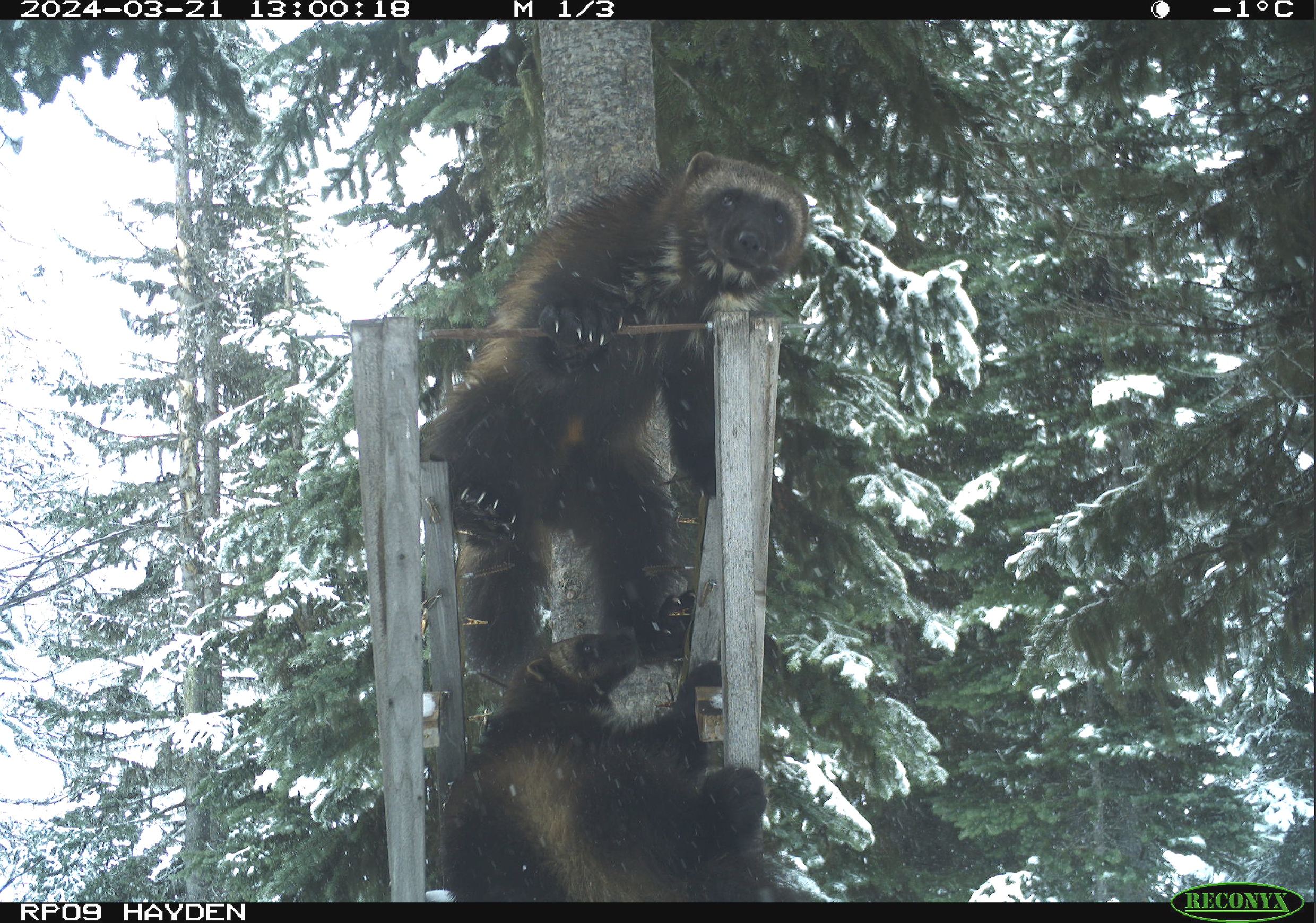
Father, Van visits a station.
His 1 and 2 year old offspring.

Equally fascinating, some wolverines appear to spend time with their younger siblings. Two-year-old Jackie was seen on camera with her one-year-old brother ten minutes after their father stopped by. We suspect the young wolverines follow each other as they make their way in the world, before dispersing to establish their own territories.
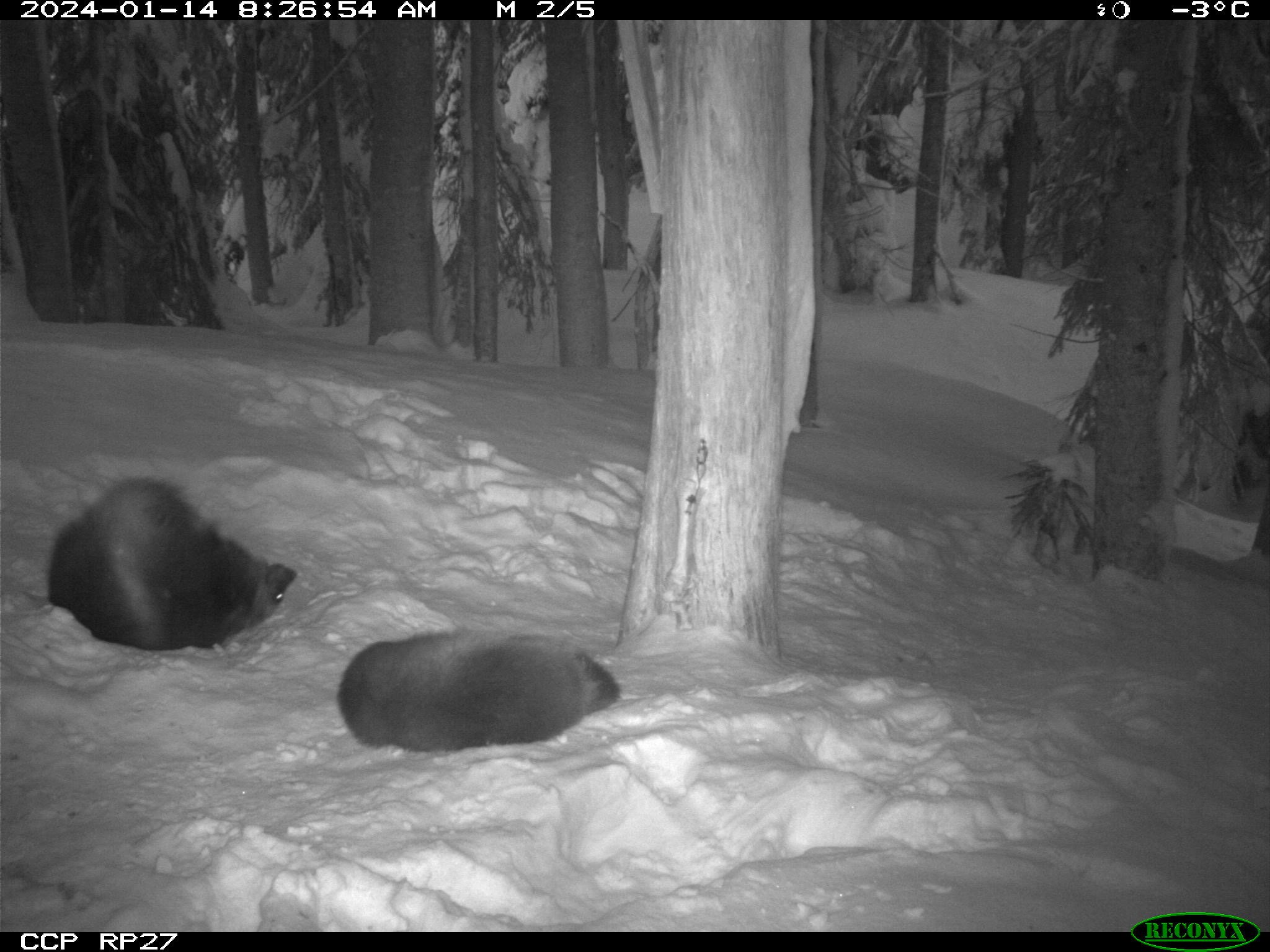
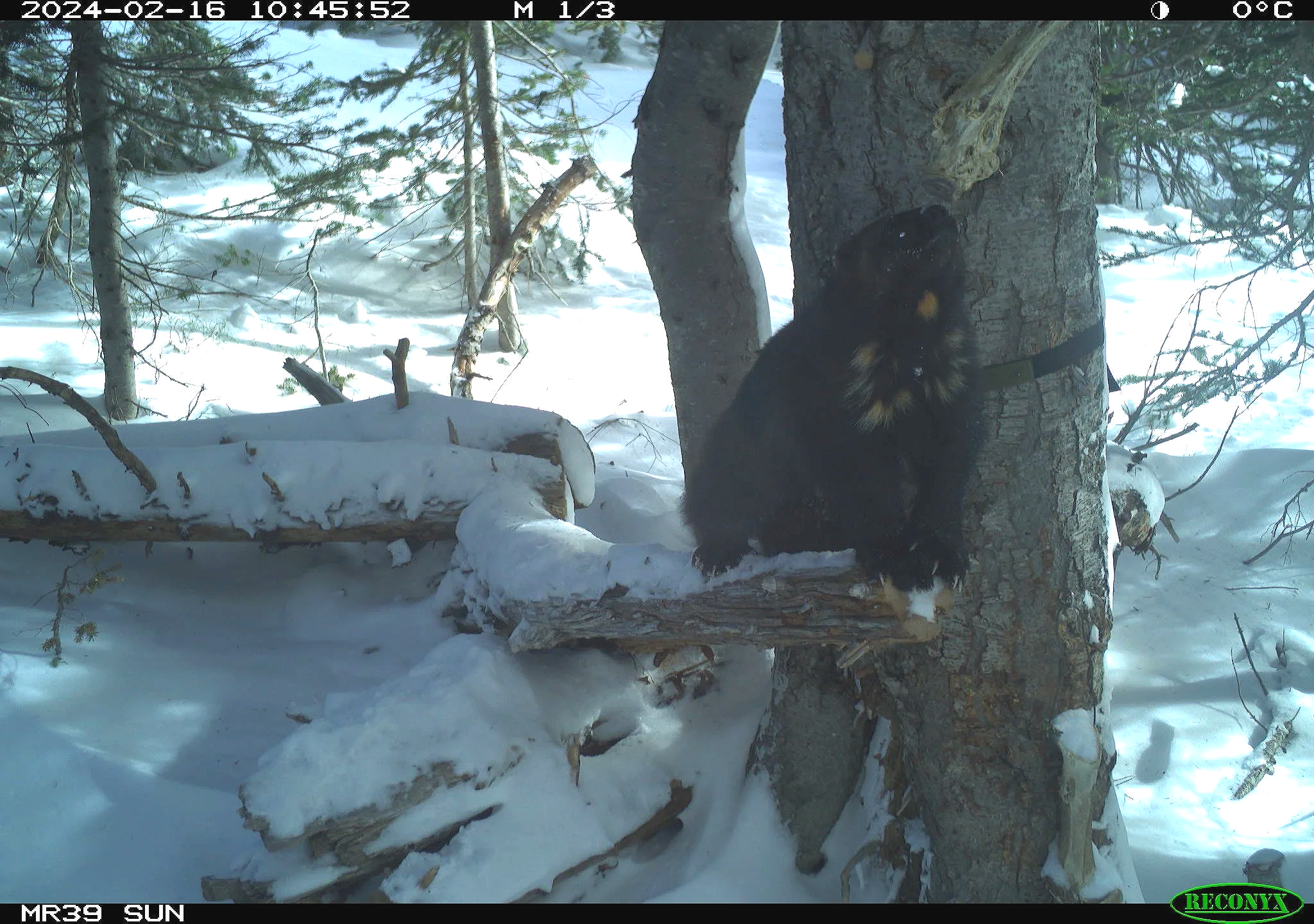
1-year-old brothers resting...
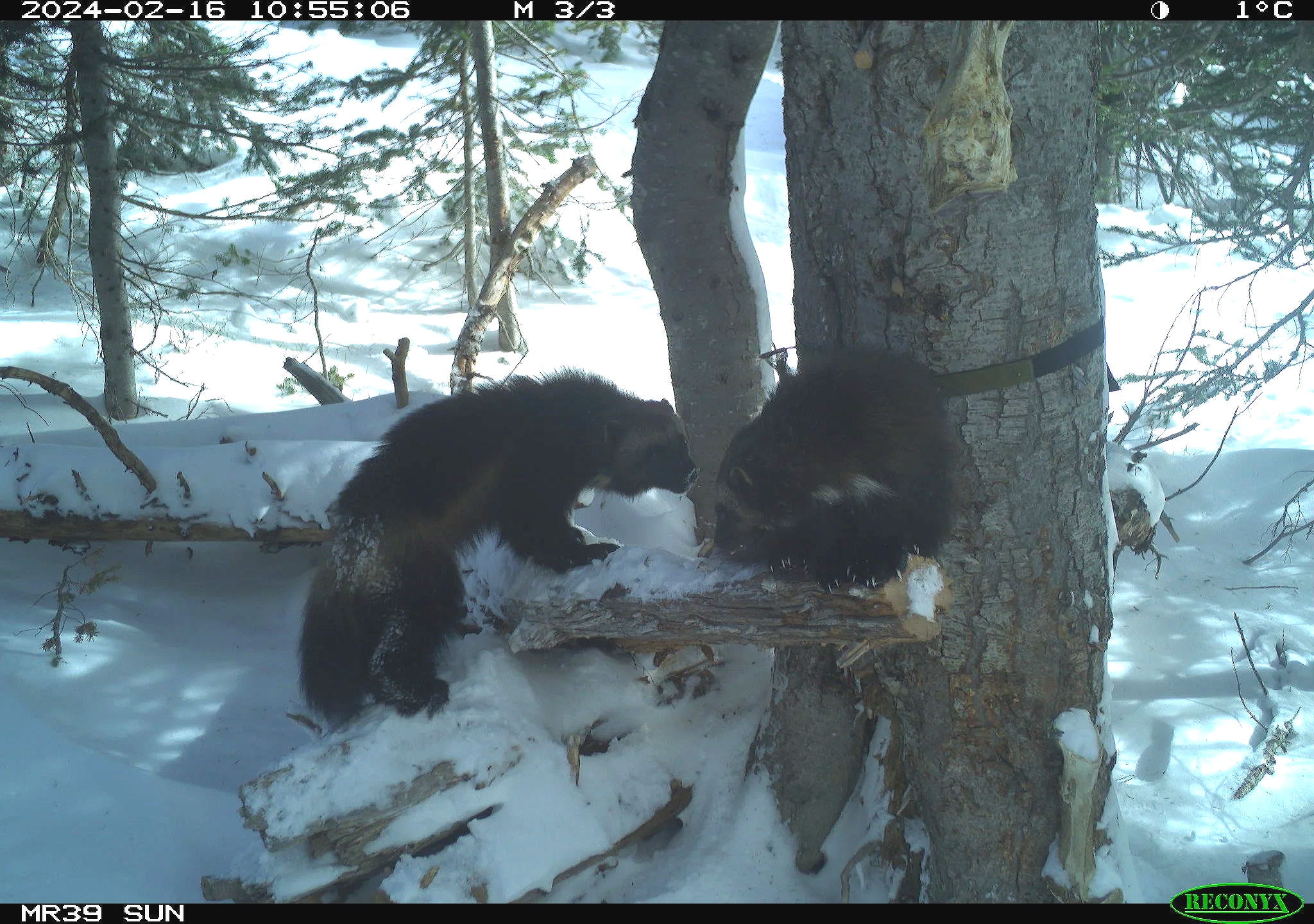
and playing.
and playing.

In 2024, 1-year-old brothers from the litter of triplets were still spending time together through rest and play. They spent three months interacting around our monitoring stations (also seen in the opening image) before leaving the area.
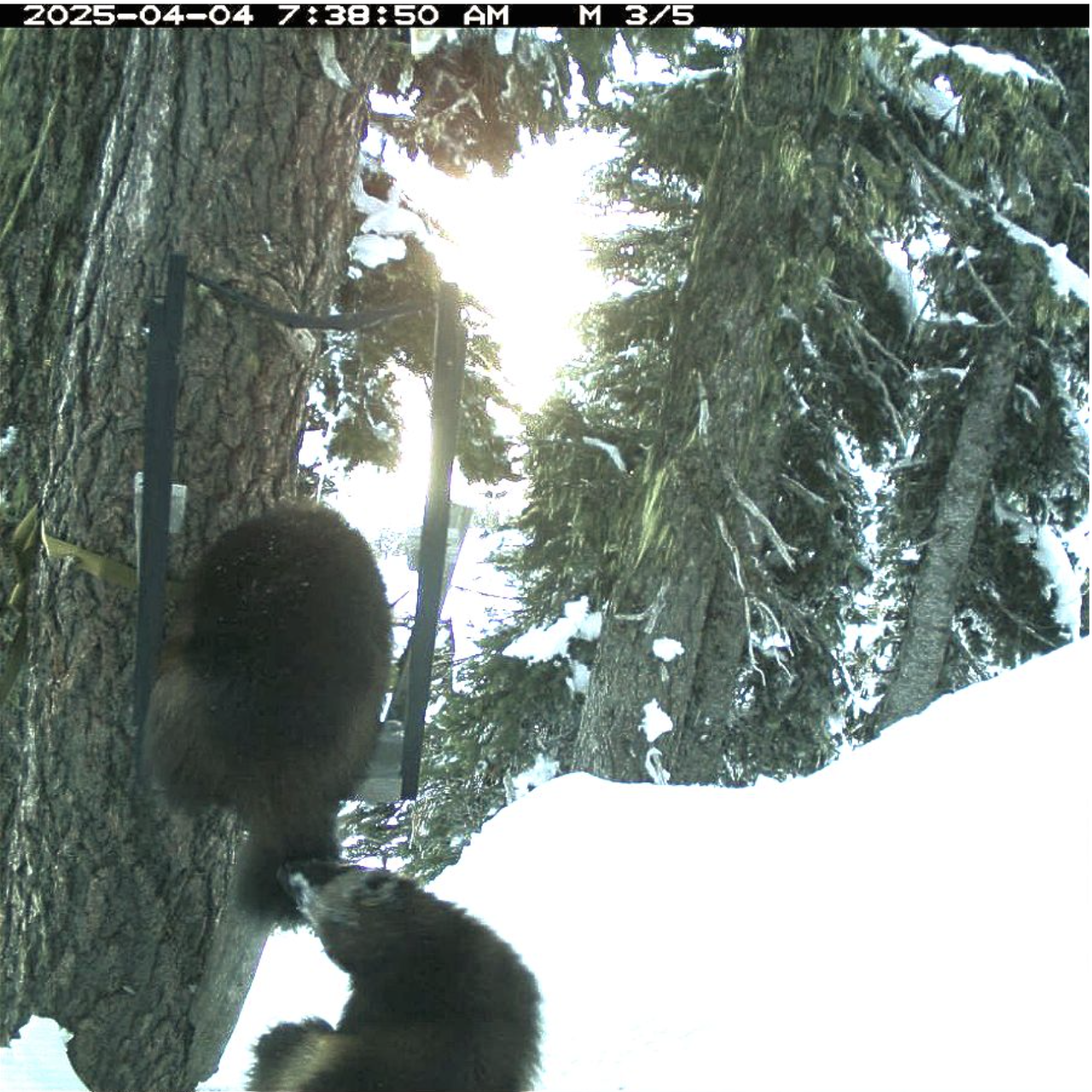
Van and Jackie playing at a runpole.

Last April, Van was spotted for the 2nd time enjoying what can only be described as a play date with his three-year-old daughter, Jackie.

Sociality in wolverines is mysterious with fragmented documentation. Van, Joni and their offspring give us a rare opportunity to delve into the depths of familial bonds. Because social behavior is a critical part of carnivore survival, biologists urgently want to learn more. These revelations prove the value of long-term research, and we look forward to documenting this family for many more years to come.
In gulo, wolverine Tags wolverine, gulo gulo, Mount Rainier, endangered species

THE SNOWPACK AND WHAT IT MEANS FOR WOLVERINES

February 11, 2026 Gretchen Stuart

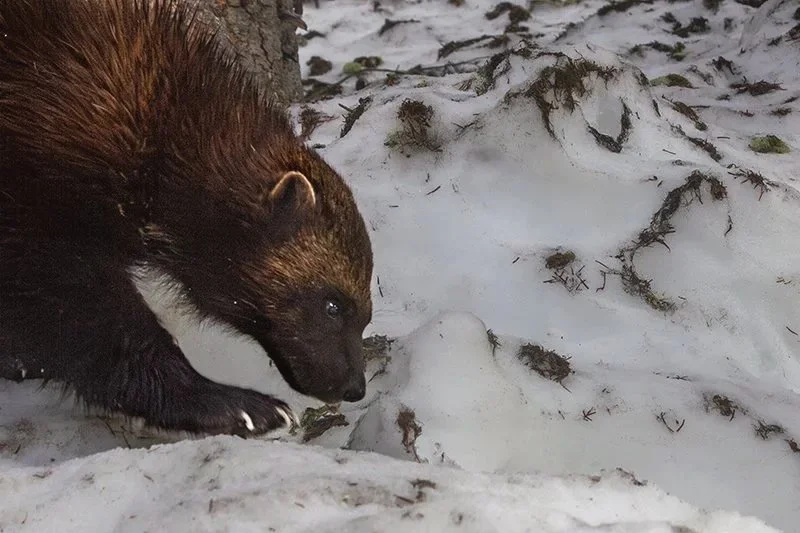
DSLR camera trap photo of Van, the male reproducing wolverine in our study area.

Words and Photos by Gretchen Kay Stuart

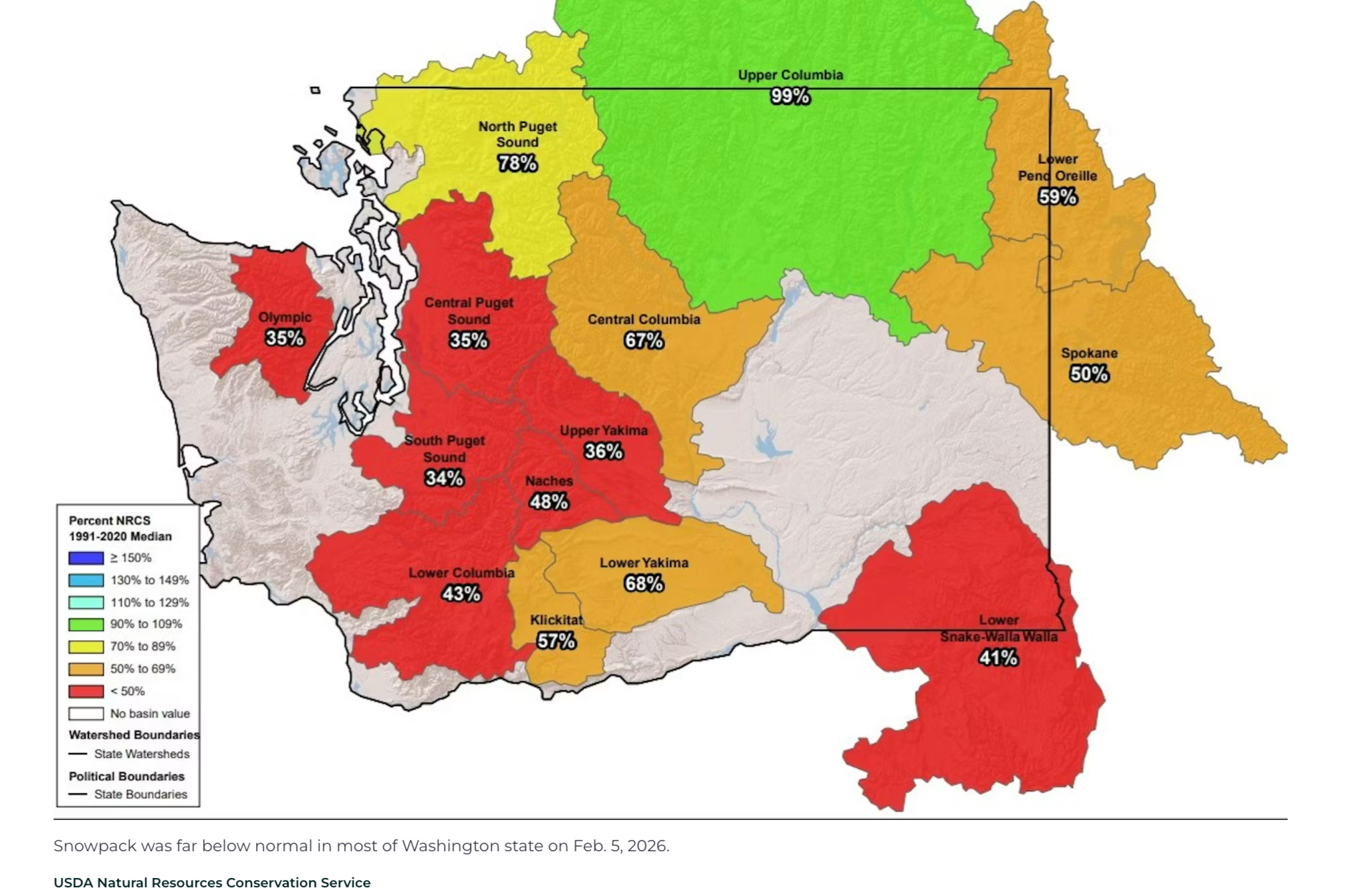
As the changing climate continues to warm our planet, those affected will reach far beyond disappointed skiers in Washington’s Cascades this winter. According to the latest data from the U.S. Department of Agriculture, Washington’s snowpack currently holds just 52% of its normal water volume, with little relief on the horizon.

We often discuss snow in terms of what it means for us: reservoirs, irrigation, and the increased wildfire risk that comes along with drought. For wolverines, this shift poses challenges as well. Deep snowpack is important for reproduction and kit survival.

Wolverine habitat in our study area has only received 34% of its annual snowpack as of February 5, 2026.

Around this time of year, wolverines give birth in dens carved not into soil, but into deep snow that persists until late spring when their kits are strong enough to start traveling with their mothers. These are not simple holes. They are intricate chambers dug into drifts that provide stable insulation against surface temperatures. The subnivean (under-snow) environment maintains a constant temperature near freezing, regardless of whether the air above is 0°F or 40°F. For wolverine kits, that stability is the difference between life and death.

Warm conditions in the Cascades create rain-on-snow events. When warm rain trickles through the snowpack, it adds weight and destroys the insulating properties of deep, fluffy snow. Wet snow can also collapse the subnivean world entirely, which wolverines and other carnivores rely upon for some of their prey.

Wolverine mothers also must plan ahead and find food for themselves and their kits when they are young and unable to leave the den. They sustain themselves in part on caches of meat stored in the snow, for example, in tree wells, which act as refrigerators to preserve their food for longer periods of time. They will stock these refrigerators in early winter before kits are born. If the refrigerator fails, the meat can thaw and rot, forcing wolverine mothers to find food elsewhere.

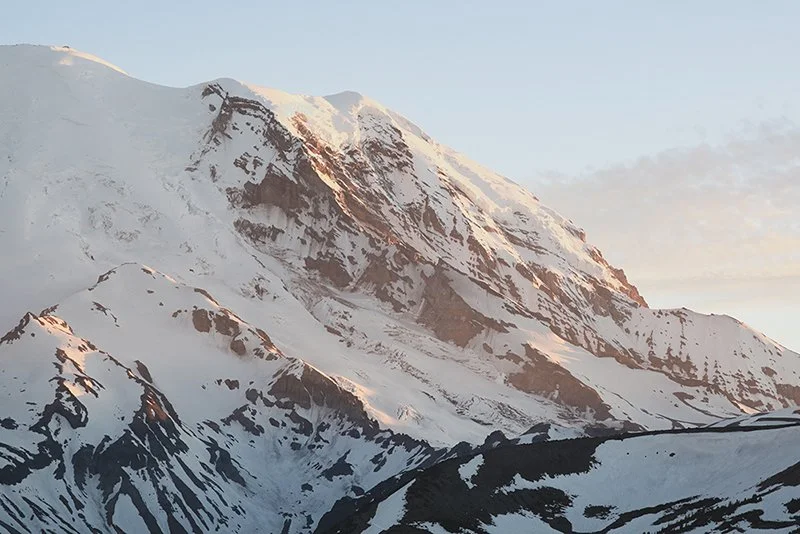
Mount Rainier by Gretchen Kay Stuart

Wolverine habitat in the Washington Cascades alpine.

Despite these challenges, there is hope. The female wolverine in our study area has consistently reproduced with success. At least one of those offspring dispersed to Oregon and perhaps traveled further to the Sierra Nevadas where a wolverine was recently detected.

What can we do? There are many small changes to diet and lifestyle that can add up to great impact. But most importantly, we can vote in local elections. Ask that our state representatives prioritize climate change and protection of our public lands and the Endangered Species Act. Educate friends and family about the importance of biodiversity, and encourage them to vote, too. With effort and time, we just might succeed in turning things around not only for the wolverine, but for all life on earth.

In wolverine, gulo Tags carnivore conservation, Mount Rainier National Park, gulo gulo, wolverine, climate change

HOW DOES DNA HELP WITH CARNIVORE CONSERVATION? (Part 1)

November 26, 2025 Jocelyn Akins

HOW DOES DNA HELP WITH CARNIVORE CONSERVATION? (Part 1)

Read more
In community science Tags wolverine, gulo gulo, Cascade red fox, DNA analysis, carnivore conservation

POWERED BY SQUARESPACE